

Summary
- A decade of research has shifted the brain-safety conversation from counting concussions to measuring cumulative head-impact exposure.
- Imaging studies show white-matter changes in players after a single season, even without a diagnosed concussion.
- Evidence from the British Journal of Sports Medicine, JAMA Pediatrics, the Boston University CTE Center, and the NIH PubMed literature converges on one finding: sub-concussive exposure matters.
- Practical implications: exposure management in practice, smart drill design, and layered equipment approaches are now legitimate brain-health levers.
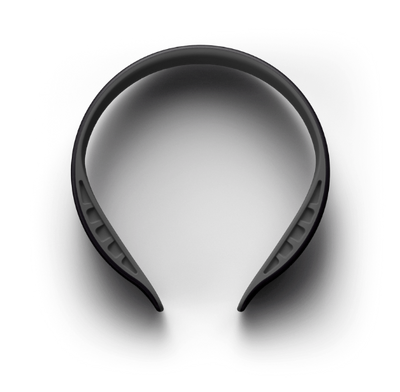
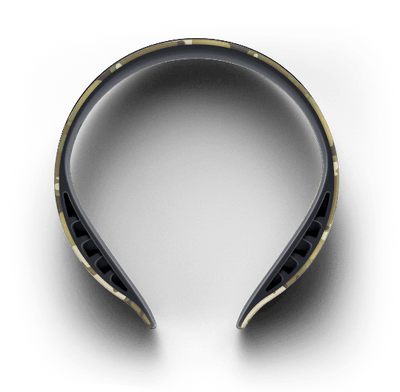
- The Q-Collar is the only FDA-cleared device designed to aid in brain protection against effects associated with repetitive sub-concussive head impacts.
In This Article
- From Counting Concussions to Measuring Exposure
- The Imaging Studies That Reframed the Conversation
- A Decade of Converging Evidence
- The Shift in How the Field Thinks
- What This Means in Practice
- Where the Research Is Heading
- The Takeaway
- Frequently Asked Questions
For most of the last century, the conversation about brain safety in sport was a conversation about concussions. Big hits. Visible symptoms. Diagnostic checklists. The assumption: if you didn't have a diagnosed concussion, you were fine.
That assumption is no longer supported by the evidence.
Over the last decade, a body of research from the British Journal of Sports Medicine, JAMA Pediatrics, the National Institutes of Health, and the Boston University CTE Center has quietly reframed the field. The question is no longer just "did this athlete sustain a concussion?" It's increasingly "what is the cumulative load of repetitive head impacts this athlete has absorbed across a season, a career, or a lifetime?"
This article is a plain-language tour of what that decade of research has actually established, and what it means for athletes, parents, and coaches who are trying to make good decisions in an information environment that's still catching up to the science.
From Counting Concussions to Measuring Exposure
The traditional model of sport-related brain injury was event-driven. A concussion was a clinical event with a diagnosis, a recovery protocol, and a return-to-play timeline. If there was no diagnosed concussion, the assumption was the brain was unaffected.
What researchers began to notice in the 2000s was that this model didn't fully explain what they were seeing in retired athletes. Particularly those that played contact sports like football, hockey, and lacrosse. Post-mortem studies on the brains of former athletes were turning up a pattern of neurodegenerative changes, now classified as chronic traumatic encephalopathy, or CTE, in individuals who had relatively few documented concussions across their careers.
If the concussions alone couldn't explain the findings, something else had to be happening. The hypothesis that emerged: the cumulative burden of hundreds, sometimes thousands, of smaller, sub-clinical head impacts over years of play.
The Imaging Studies That Reframed the Conversation
One of the clearest lines of evidence for this hypothesis came from a series of diffusion tensor imaging (DTI) studies, a type of MRI scan that measures the integrity of brain white matter. Researchers began scanning high school and college football players before and after a single competitive season and comparing the results.
The finding that made headlines in the sports medicine community: In several studies, researchers observed changes in white matter integrity in players who had completed a full season, even in players who had never been diagnosed with a concussion during that season.
In plain terms: A full season of football practices and games appeared to produce measurable changes in the brain, in players who, by every traditional clinical measure, were fine.
Those studies didn't establish long-term clinical consequences on their own. But they did something more important: they gave researchers a reproducible, imaging-based way to detect sub-concussive brain changes in real athletes in real seasons, in real time.
A Decade of Converging Evidence
The imaging research didn't stand alone. Over the past decade, a series of independent research threads have converged on the same broad finding.
The Boston University CTE Center
Research from the Boston University CTE Center has documented CTE in the brains of former professional and amateur football players, hockey players, wrestlers, and military veterans. The pattern that has emerged from that work is consistent: CTE severity has been shown to correlate with cumulative years of exposure to repetitive head impacts. This is a significant signal in the literature that the issue extends beyond discrete concussive events to include broader exposure patterns.
JAMA Pediatrics and Youth Sports
Research in JAMA Pediatrics has examined youth-sport exposure and outcomes, highlighting that young athletes, whose brains are still developing, are a population where cumulative exposure management matters the most. The American Academy of Pediatrics has updated its guidance to incorporate broader prevention strategies beyond acute concussion management alone.
NIH and the Head Impact Exposure Literature
A broader literature catalogued in the NIH's PubMed database has quantified sub-concussive impact exposure in actual playing conditions. The Broglio et al. study in the Journal of Neurotrauma followed 95 high school football players across four seasons and recorded an average of 652 head impacts per player per season, with linemen averaging 868. The researchers described the cumulative burden across a career as "staggering." None of those impacts were individually diagnosed as concussions.
Systematic Reviews
Systematic reviews in the British Journal of Sports Medicine have now synthesized dozens of individual studies across sports, age groups, and exposure levels. The cumulative conclusion: repetitive head impact exposure is a meaningful variable in long-term brain health outcomes, independent of diagnosed concussion history. The scientific consensus is not "sub-concussive impacts are harmless." It's "sub-concussive impact exposure is a variable worth measuring, reducing where possible, and continuing to study."
The Shift in How the Experts Think
If you read concussion research papers from 2005 and compare them to concussion research papers from 2025, the difference in framing is striking. The older papers treat concussions as the unit of analysis. The newer papers are much more likely to talk about:
- Cumulative impact load: total head impacts across a season, a career, or a competitive window
- Impact magnitude distribution: not just how many hits, but how hard, and with what rotational component
- Position-specific and sport-specific exposure profiles: a lineman, a lacrosse midfielder, a hockey player, and a soccer header specialist all have very different exposure profiles
- Developmental windows: why exposure at age 12 may not be the same as exposure at age 22
- Recovery and rest: not just after a concussion, but between high-exposure events
This is a substantial shift. It doesn't mean concussions are less important than they used to be. It means the picture is bigger than concussions alone, and the field now has tools, data, and vocabulary to discuss the bigger picture in specific, measurable terms.
What This Means in Practice
A decade of research doesn't automatically produce a one-size-fits-all answer for parents, athletes, and coaches. But it does produce a set of implications that are now generally agreed upon among sports medicine researchers:
- Exposure management is as important as concussion management. Limiting the volume of unnecessary head impacts in practice, across a season, and across a career is a legitimate brain-health lever, not just a precaution against "the big hit."
- Practice design is brain-health design. Drill selection, contact volume, and technique emphasis directly affect exposure totals. The programs that have quietly reduced practice-contact volumes over the last decade are acting on this evidence.
- The equipment stack matters, but its role is bounded. Helmets are engineered to address skull fractures and reduce translational acceleration. They are not designed to, and cannot, eliminate the rotational forces and brain movement inside the skull that researchers have identified as mechanisms of sub-concussive brain change.
- Reporting culture matters. Guidance from the CDC's HEADS UP initiative and research from groups like UPMC suggests that a large fraction of youth concussions go unreported. The cultural factors that suppress concussion reporting also complicate any attempt to measure cumulative exposure accurately.
FOR ATHLETES
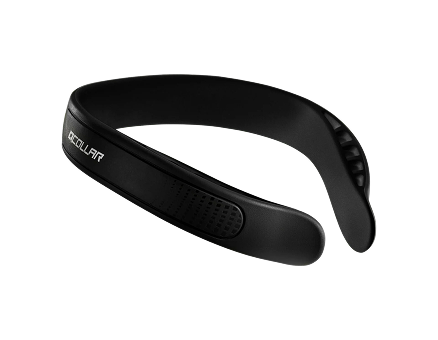
Q-Collar
FDA-cleared to help protect athletes' brains from effects of repetitive sub-concussive head impacts.
$199.00
Buy NowThe Q-Collar is the only device developed specifically in the context of this research shift. It is FDA-cleared to aid in the protection of the brain from effects associated with repetitive sub-concussive head impacts. It is designed to complement the existing equipment stack (helmet, shoulder pads, mouthguard), not to replace any part of it. It represents an additional layer of a multi-layered approach, which is exactly how the research community now frames the broader problem.
Where the Research Is Heading
The most active current research questions in this field are not whether sub-concussive impacts matter (the field has largely answered that question with "yes, they matter"), but rather:
- What biomarkers, blood-based, imaging-based, or cognitive, can detect sub-concussive brain changes earlier and more reliably?
- How do factors like age, sex, neck strength, and genetic background modulate the effect of a given exposure load?
- What combinations of rule changes, practice design, equipment, and training (including neck-strengthening) produce the largest measurable reductions in cumulative exposure?
- What are the long-term outcomes for the current generation of athletes, who are playing under modified rules and protocols that their predecessors did not have?
These are the questions active researchers are pursuing right now, and the next decade of the literature is likely to be dominated by them.
The Takeaway
The most important thing a parent, coach, or athlete can take from a decade of sub-concussive impact research is not a specific product recommendation, a specific drill, or a specific number of acceptable hits. It's a reframing.
Brain safety in contact sport is no longer a question with a binary answer: did you get a concussion or not? It's a continuous variable. And the choices that coaches, parents, and athletes make about practice volume, reporting culture, equipment, and return-to-play all sit on a single axis: how do we reduce unnecessary exposure while preserving the games we love?
That's the conversation the research has given us. It's a better conversation than the one we were having ten years ago.
Frequently Asked Questions
What is a sub-concussive impact?
A sub-concussive impact is a head impact below the clinical threshold for a diagnosed concussion. These impacts typically do not produce immediate symptoms and are often invisible to coaches, parents, and athletes themselves. Research suggests that their cumulative load across a season or career can produce measurable changes in brain structure, even in athletes with no documented concussion history.
How is the research conducted?
The methods vary. Some studies use diffusion tensor imaging (DTI) MRI scans before and after a season to measure changes in brain white matter. Others use helmet-mounted accelerometers to count and quantify every impact a player sustains over a season. Longer-term studies examine retired athletes and, in some cases, post-mortem brain tissue. Together, these methods triangulate a picture of cumulative exposure and its correlates.
Has the scientific consensus actually shifted?
Yes. The framing in contemporary sports medicine literature has moved from a concussion-centric model to an exposure-centric model. The major findings of the last decade, from the BJSM, JAMA Pediatrics, the Boston University CTE Center, and the broader NIH-indexed literature, are mutually reinforcing on this point. This is reflected in updated guidance from bodies like the American Academy of Pediatrics.
What can athletes, parents, and coaches actually do with this information?
The most actionable implications are exposure management (reducing unnecessary practice contact, using progressive drill design, and emphasizing technique), supporting open reporting culture (the CDC's HEADS UP initiative has free resources for parents and coaches), and building a comprehensive equipment approach in contact practices and games. The Q-Collar is the only device developed in the context of this research and FDA-cleared for use across football, lacrosse, hockey, soccer, and other impact sports.
Does wearing a Q-Collar or any other device prevent concussions?
No device on the market, including the Q-Collar, can claim to prevent concussions. The Q-Collar is FDA-cleared to aid in the protection of the brain from effects associated with repetitive sub-concussive head impacts and is designed to be used in addition to helmets and other sport-appropriate protective equipment, not in place of them.
Where can I read the primary research?
The primary studies referenced in this article are indexed in the NIH's PubMed database and are available through the British Journal of Sports Medicine, JAMA Pediatrics, and the peer-reviewed publications of the Boston University CTE Center. The CDC HEADS UP initiative publishes accessible summaries of much of this research for non-specialist audiences.