

Does the Q-Collar Actually Work? What the Research Shows in 2026
Summary
- The Q-Collar received FDA clearance in February 2021 after the agency reviewed data from 500+ athletes across multiple prospective clinical studies involving more than 500,000 head impacts.
- A study published in the British Journal of Sports Medicine involving 42 high school football players found that collar-wearing athletes showed no significant white matter changes on DTI imaging, while the control group showed measurable changes despite similar head impact exposure.
- Independent research at Cincinnati Children's Hospital and the University of Toronto replicated the protective pattern across hockey and soccer, with 25+ peer-reviewed studies published over 10+ years.
- The Q-Collar applies light pressure to the jugular veins, slightly increasing blood volume inside the skull, which reduces brain movement upon impact, the mechanism confirmed in a 2021 study showing optic nerve sheath diameter increased from 4.6mm to 4.9mm.
- The device is designed as an additional layer of protection used WITH helmets and sport-appropriate protective equipment, not as a replacement for existing gear.
Jump to a Section
- What Parents and Athletes Actually Ask
- FDA Clearance: What It Means and What It Doesn't
- The Pivotal Studies Behind the Clearance
- How the Q-Collar Works: The Science Behind Jugular Compression
- Independent Replication Across Sports
- What DTI Imaging Shows, and What It Doesn't Predict
- Why Pro Athletes Wear It
- The Layered Equipment Approach
- Frequently Asked Questions
What Parents and Athletes Actually Ask
When a parent sees a new piece of equipment marketed for brain protection, the first question is simple: does the Q-Collar actually work?
The question deserves a direct answer, not marketing copy. Parents want to know what the research shows, what the FDA reviewed before clearing the device, and whether the claims hold up under independent scrutiny.
The short version: the Q-Collar is the first and only FDA-cleared device in its category, backed by 25+ peer-reviewed studies involving more than 500 athletes and 500,000+ recorded head impacts. Researchers observed that athletes wearing the collar showed significantly less evidence of brain structure changes on advanced imaging compared to control groups, across multiple sports and multiple independent research sites.
The longer version requires understanding what the device is designed to do, what the FDA clearance actually means, and what the research does and does not demonstrate.
FDA Clearance: What It Means and What It Doesn't
In February 2021, the FDA cleared the Q-Collar as a Class II medical device through the De Novo pathway. This is not a rubber stamp. The De Novo pathway is reserved for novel devices with no existing predicate, devices that require the agency to establish an entirely new regulatory framework.
The FDA reviewed data from multiple prospective clinical studies involving football players and soccer players. The agency examined safety data, mechanism-of-action studies, and imaging outcomes. The clearance was granted with a specific indication for use: the Q-Collar is designed to help protect the brain from the effects associated with repetitive sub-concussive head impacts.
What the FDA clearance does NOT mean:
- It does not mean the device helps protect the brain.
- It does not mean the device prevents serious brain injury.
- It does not mean imaging findings predict future cognitive deficits.
- It does not mean the device replaces helmets or other protective equipment.
The FDA was explicit in its limitations statement. The agency stated that data do not demonstrate that the device can help protect the brain or serious brain injury, that the Q-Collar has not been demonstrated to prevent long-term cognitive function deficits, and that the use of imaging studies as a future indicator of brain injury has not been validated.
These limitations are not disclaimers buried in fine print. They are the framework within which the device was cleared. The Q-Collar is designed to reduce the brain's movement inside the skull during impact. The research shows that this reduction in movement has been associated with fewer measurable changes on brain imaging. What happens beyond that, across a lifetime of play, remains an open research question.
The Pivotal Studies Behind the Clearance
The FDA reviewed data from two large prospective studies, one in football and one in soccer, alongside several smaller supporting studies. The football study, published in the British Journal of Sports Medicine, enrolled 42 high school football players over a single season. Half wore the Q-Collar during all practices and games. Half did not.
Both groups wore the same helmets. Both groups wore the same pads. Both groups were exposed to similar numbers of head impacts, measured using helmet-mounted accelerometers. The only difference was the collar.
At the end of the season, researchers performed diffusion tensor imaging (DTI) scans on all participants. DTI is a specialized MRI technique that measures the microstructure of white matter in the brain. White matter consists of the long nerve fibers that connect different brain regions. When these fibers are stretched or damaged, DTI can detect changes in their organization.
The results: the control group, the athletes who did not wear the collar, showed significant white matter changes in multiple brain regions. The collar-wearing group showed no significant changes. Despite absorbing the same number and magnitude of hits, the athletes wearing the collar showed brain imaging that looked more like baseline.
The hockey pilot study, published in Frontiers in Neurology, replicated the same pattern with 15 high school hockey players. The soccer study at Cincinnati Children's Hospital, involving adolescent female athletes, found the same protective association. Across three different sports, three different research teams, the pattern held.
How the Q-Collar Works: The Science Behind Jugular Compression
The Q-Collar does not absorb impact. It does not reduce the force delivered to the head. It does not change the way a helmet fits or the way shoulder pads distribute load.
What it does is change the environment inside the skull before impact happens.
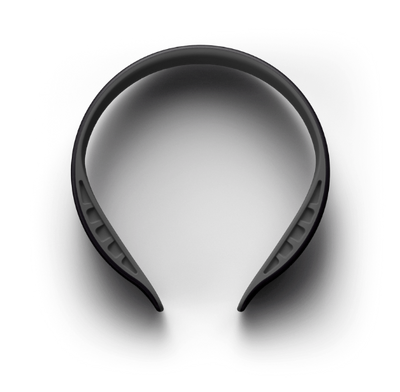
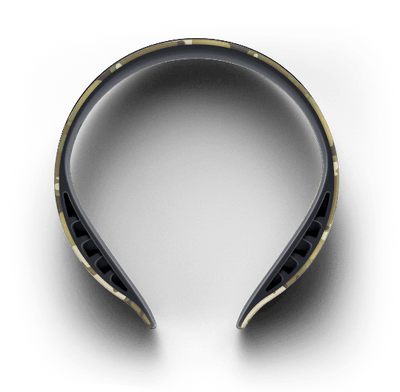
The device applies light, comfortable pressure to the sides of the neck, over the internal jugular veins. This pressure partially occludes the veins, slightly reducing the rate at which blood drains from the brain back toward the heart. Blood continues to flow in through the carotid arteries at the normal rate. The result is a small, temporary increase in blood volume inside the skull.
A 2021 study published in the British Journal of Sports Medicine by researchers at the University Health Network in Toronto confirmed this mechanism. The study enrolled 19 adults and measured optic nerve sheath diameter, a validated proxy for intracranial volume, before and after applying jugular vein compression. The optic nerve sheath diameter increased from 4.6mm to 4.9mm, a small but measurable change that confirmed increased blood volume inside the skull.
Why does this matter? When the brain has slightly more volume inside the skull, it fits more snugly. There is less space for the brain to accelerate and decelerate during impact. The brain moves less. Brain slosh, the stretching and tearing of brain fibers that occurs when the brain bounces against the inside of the skull, is reduced.
This is not speculation. This is the mechanism the FDA reviewed and cleared.
Independent Replication Across Sports
One study can be an anomaly. Two studies can be a pattern. Three studies, conducted by independent research teams at different institutions, studying different sports, using the same imaging protocols, all finding the same protective association, that begins to look like a reliable signal.
The research behind the Q-Collar spans more than 10 years. The first pilot studies began at Cincinnati Children's Hospital in the early 2010s. Researchers there were studying the effects of repetitive head impacts in youth athletes and looking for interventions that might reduce the cumulative damage observed on brain imaging.
The football study came first. Then hockey. Then soccer. Each study used the same DTI imaging protocol. Each study measured head impact exposure using accelerometers. Each study compared collar-wearing athletes to matched controls. Each study found the same result: the collar group showed fewer brain structure changes at the end of the season.
By the time the FDA reviewed the data in 2021, the evidence base included 500+ athletes, 500,000+ head impacts, and 25+ peer-reviewed publications. The research had been replicated across multiple sports, multiple age groups, and multiple research sites. The findings had been presented at conferences, critiqued by independent reviewers, and published in top-tier journals.
This is not a single lab making a single claim. This is a decade of independent research converging on the same conclusion.
What DTI Imaging Shows, and What It Doesn't Predict
DTI imaging is a powerful research tool. It allows researchers to measure changes in brain microstructure that are invisible on standard MRI. It has been used in hundreds of studies examining brain injury, neurodevelopmental disorders, and aging.
What DTI does not do is predict the future. The FDA was explicit on this point: the use of imaging studies as a future indicator of brain injury has not been validated.
This means that while the research shows collar-wearing athletes have fewer white matter changes at the end of a season, we do not know with certainty what those changes mean for cognitive function 10 years later, or 20 years later, or at age 60. The imaging findings are biomarkers, endpoints used in clinical research to measure an intervention's effect. They are not diagnostic tests for future disease.
The assumption, supported by post-mortem studies on the brains of former athletes and by longitudinal research tracking cognitive decline in retired players, is that cumulative brain damage matters. The assumption is that reducing measurable brain structure changes today reduces the risk of problems tomorrow. But that assumption has not been proven in a randomized controlled trial with decades of follow-up, because such a trial does not yet exist for any brain protection intervention.
What we do know is this: repetitive head impacts have been associated with white matter changes on DTI. Those changes have been associated with cognitive deficits in some studies. The Q-Collar has been associated with fewer of those changes. The chain of evidence is not complete, but it points in a consistent direction.
Why Pro Athletes Wear It
Professional athletes have access to the best equipment, the best medical staff, and the best information. They do not wear equipment because of marketing. They wear it because it works, or because the evidence suggests it might work, and the risk of not wearing it is unacceptable.
In football, players like Sauce Gardner of the New York Jets, Logan Wilson of the Cincinnati Bengals, and Tony Pollard of the Tennessee Titans wear the Q-Collar during games. In lacrosse, Michael Sowers of the Philadelphia Waterdogs and Rob Pannell of the Maryland Whipsnakes wear it. In soccer, Jeremy Ebobisse of LAFC wears it.
These athletes are not paid spokespeople reading scripts. They are professionals who have reviewed the research, consulted with team physicians, and made a decision about their own brain health.
The decision is not based on the belief that the Q-Collar helps protect the brain. It is based on the understanding that repetitive sub-concussive impacts, the hundreds or thousands of smaller hits absorbed over a career, may carry long-term consequences. The research shows that the collar reduces measurable brain changes associated with those impacts. That is enough.
The Layered Equipment Approach
The Q-Collar is not a replacement for a helmet. It is not a replacement for shoulder pads, or a mouthguard, or proper tackling technique. It is one layer in a comprehensive approach to brain protection.
In football, that approach includes:
- A properly fitted helmet designed to reduce linear and rotational forces
- Shoulder pads and other padding to distribute impact load
- A mouthguard to reduce jaw acceleration and protect teeth
- Proper tackling and blocking technique to reduce high-risk impacts
- Practice structure that limits full-contact drills
- The Q-Collar to reduce brain movement inside the skull during unavoidable impacts
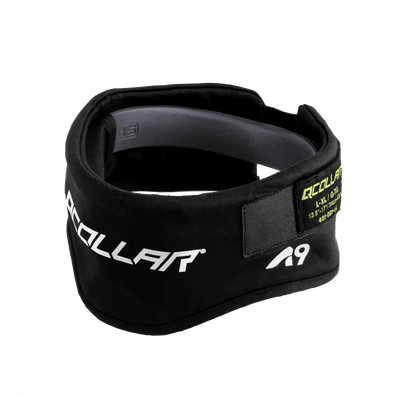
In hockey, the approach includes a helmet with a cage or shield, neck guard, shoulder pads, and the Q-Collar. In soccer, where helmets are not worn, the approach includes proper heading technique, limited heading in practice, and the Q-Collar as the only equipment-based brain protection available.
No single piece of equipment eliminates risk. The goal is to reduce risk at every layer.
For families building a complete brain safety setup, the Q-Collar product page covers pricing, sizing, and the full feature set, and sport-specific research is gathered on the Q-Collar Science page.
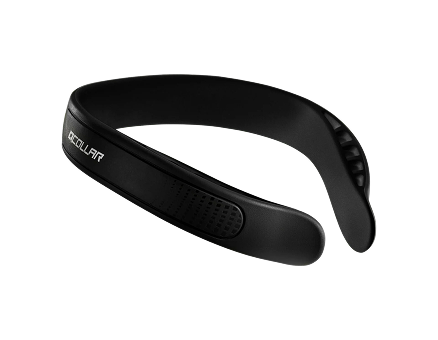
FOR ATHLETES
Q-Collar
The first and only FDA-cleared device designed to help protect the brain from the effects of repetitive sub-concussive head impacts in sports.
$199.00
Buy NowFrequently Asked Questions
Does the Q-Collar actually work?
The Q-Collar is FDA-cleared based on data from 500+ athletes across multiple prospective clinical studies. Research published in the British Journal of Sports Medicine and other peer-reviewed journals has shown that collar-wearing athletes had significantly fewer white matter changes on DTI brain imaging compared to control groups, despite similar head impact exposure. The device applies light pressure to the jugular veins, slightly increasing blood volume inside the skull, which reduces brain movement during impact. This mechanism has been confirmed in independent studies.
How does the Q-Collar help protect the brain?
The Q-Collar is FDA-cleared to help protect the brain from the effects of repetitive sub-concussive head impacts. However, the FDA states that "data do not demonstrate that the device can help protect the brain or serious brain injury." The Q-Collar is designed as an additional layer of protection to be used alongside helmets and other sport-appropriate protective equipment, not as a replacement for any existing gear.
What sports can the Q-Collar be used in?
The Q-Collar has been studied and is worn in football, hockey, lacrosse, and soccer. It is designed for any contact or collision sport where repetitive head impacts occur. The device fits comfortably under helmets and other protective equipment in football, hockey, and lacrosse, and is worn around the neck in soccer where no helmet is used.
How does the Q-Collar work?
The Q-Collar applies light, comfortable pressure to the sides of the neck over the internal jugular veins. This pressure partially occludes the veins, slightly increasing blood volume inside the skull. A 2021 study confirmed that this compression increases intracranial volume, causing the brain to fit more snugly within the skull. When the head absorbs an impact, the brain moves less, reducing the stretching and tearing of brain fibers associated with brain slosh.
Is the Q-Collar safe?
The Q-Collar received FDA clearance as a Class II medical device in February 2021 after extensive safety review. The device applies pressure to the jugular veins only, it does not reduce blood circulation or blood flow through the carotid arteries. Studies involving hundreds of athletes have shown no adverse effects from wearing the collar during sports. The device is designed to be comfortable and does not interfere with breathing, swallowing, or movement.
What is DTI imaging and why does it matter?
Diffusion tensor imaging (DTI) is a specialized MRI technique that measures the microstructure of white matter in the brain. White matter consists of nerve fibers that connect different brain regions. When these fibers are stretched or damaged by repetitive impacts, DTI can detect changes in their organization. The Q-Collar studies used DTI as the primary endpoint to measure brain structure changes over a season. Collar-wearing athletes showed fewer changes on DTI compared to control groups.
Who wears the Q-Collar?
The Q-Collar is worn by professional athletes in football, lacrosse, and soccer, including Sauce Gardner of the New York Jets, Logan Wilson of the Cincinnati Bengals, Tony Pollard of the Tennessee Titans, Michael Sowers of the Philadelphia Waterdogs, and Jeremy Ebobisse of LAFC. It is also worn by high school and collegiate athletes across multiple sports. The device is designed for athletes playing contact and collision sports.
How much does the Q-Collar cost and where can I buy it?
The Q-Collar is priced at $199. It is available for purchase at q30.com and through many retail locations. For a list of retail partners near you, visit the store locator page. The Q-Collar is sized numerically based on neck circumference, and a sizing guide is available on the product page.