

Most people think of Friday nights and Saturday games when they think about head impacts in football. But the research tells a different story. A four-year study published in the Journal of Neurotrauma tracked 95 high school football players and recorded over 101,000 head impacts. The finding that matters most for coaches, parents, and players: positions like linemen sustained 59% of their total season impacts during practice — not games.
That number changes how you think about practice design. If the majority of cumulative head impact exposure happens between games, then how you structure drills, manage contact volume, and equip your players during practice is just as important as what happens on game day.
This guide breaks down the drills that build better football players — and what coaches and athletes can do to reduce cumulative impact exposure across a full season.
The Numbers: Why Practice Matters More Than You Think
The Broglio et al. study followed players across 190 practices and 50 games over four seasons. The per-session numbers tell part of the story:
- Linemen: 10.7 impacts per practice vs. 28.7 per game
- Tight Ends / Running Backs / Linebackers: 7.1 per practice vs. 24.0 per game
- Receivers / Defensive Backs: 4.5 per practice vs. 15.7 per game
- Quarterbacks: 3.1 per practice vs. 25.6 per game
Per session, games are worse. But a typical season has four to five practices for every one game. When you multiply those per-session numbers across an entire season, the math shifts. Players averaged 652 head impacts per season, with linemen absorbing an average of 868. The researchers described the cumulative burden as "staggering."
The takeaway isn't that practice is dangerous. It's that practice is where the volume lives — and smart practice design can meaningfully reduce that volume without sacrificing player development.
Contact Drills That Build Better Technique
Tackling Progression
Tackling is where the majority of practice contact occurs. The best programs use a progression that builds technique before adding speed and live contact.
- Angle fit drills on bags: Teach proper shoulder placement, head position (eyes up, head to the side — never leading with the crown), and hip drive. Zero head impact when done on bags.
- Thud-pace partner tackles: Progress to controlled contact with a partner at 75% speed. Emphasize wrapping and driving through, not collision. Coach corrects form in real time.
- Live tackling reps: Full speed, full contact. Limit to 2-3 reps per player per practice. Quality over quantity — every live rep should reinforce the technique built in the first two stages.
Blocking and Pass Protection
Offensive and defensive line drills involve the most consistent head contact in practice. Every rep — hand combat, run fits, pass rush — puts helmets in proximity.
- Sled work: Teaches pad level and hand placement without player-to-player contact. High rep volume, zero head impact risk.
- One-on-one pass rush: Develop hand speed and counter moves. Coach the "hands first" approach — a lineman who wins with hand technique takes less head contact than one who dips into every block.
- Inside run fits: Controlled tempo. Set a limit on full-speed reps — many programs cap inside run at 6-8 live reps per practice.
Team Competitive Periods
Full-team, full-speed competitive periods are where practice most resembles a game. They're essential for preparation — but they're also where cumulative contact exposure is highest.
- "Thud" vs. "Live" designation: Many programs designate competitive periods as "thud" (contact to the point of contact, no taking to the ground) vs. "live" (full tackle-through). Limiting live periods to 1-2 per week significantly reduces total contact volume.
- Play count management: Track the number of contact plays per player per practice. Set position-specific limits based on the research — linemen need more protection here than skill positions.
- Recovery days: Non-contact walkthrough days between heavy practice days give the brain recovery time between contact exposures.
Building a Safer Equipment Stack for Practice
Drill design is the first layer of protection. Equipment is the second. The smartest programs treat practice equipment the same way they treat game-day equipment — because that's where the exposure is.
- Helmet: Properly fitted, recertified annually. The single most important piece of protective equipment. Should be worn in every contact practice — never optional.
- Shoulder pads: Sized for full range of motion. Improperly fitted pads create leverage points that transfer force upward toward the head.
- Mouthguard: Fitted, not generic. Protects teeth from direct impact and helps prevent dental injuries during contact — essential in every practice.
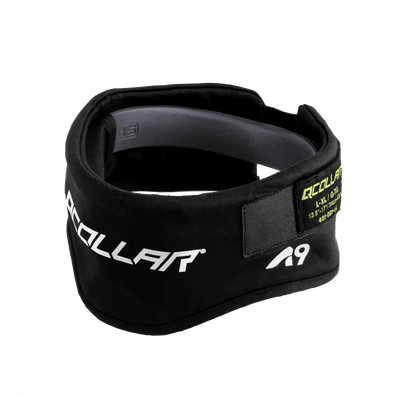
- Q-Collar: An FDA-cleared device that is worn on the neck below the helmet and above the pads. It applies gentle pressure to the jugular veins, slightly increasing blood volume inside the skull, which helps reduce brain movement upon impact. Designed to work with existing equipment — one more layer of protection in the stack.
Players like Sauce Gardner, Drue Tranquill, Logan Wilson, and Tony Pollard wear the Q-Collar during both practice and games — because they understand that protection during practice matters as much as protection on game day. (Read Tony Pollard's perspective on football safety.)
Why This Matters: The Cumulative Impact Problem
The conversation around brain safety in football has historically focused on concussions — the big hits, the visible injuries. But the research is increasingly pointing to a different problem: the accumulation of sub-concussive impacts that don't produce symptoms but may cause measurable changes to brain structure over time.
A 2016 study published in the British Journal of Sports Medicine followed 42 high school football players through a competitive season. Using DTI brain imaging before and after the season, researchers observed significant changes to brain white matter in players who went through a full season of play — even though none of those players were diagnosed with a concussion.
This is the cumulative impact problem. It's not one hit. It's hundreds of hits, across hundreds of reps, across dozens of practices, compounded over a season. And since the majority of those reps happen in practice, that's where the opportunity to reduce exposure is greatest.
The solution isn't to stop practicing. Football requires contact to develop the skills players need. The solution is a combination of:
- Better drill design — progressive loading, technique before contact, managed rep counts
- Better coaching — teaching heads-up tackling, hand-first blocking, proper pad level
- Better protection — properly fitted helmets, full equipment in every contact practice, and additional protective technology like the FDA-cleared Q-Collar
- Better awareness — understanding that impacts accumulate and that repetitive head impacts carry risk beyond game day
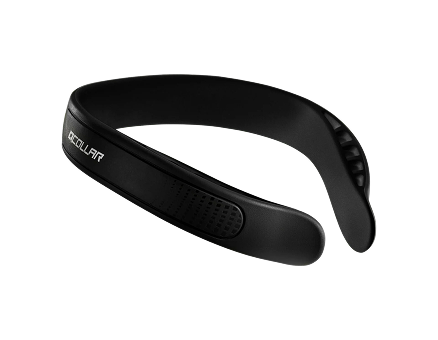
FOR ATHLETES
Q-Collar
Proven to help protect athletes' brains in a way other equipment can't.
$199.00
Buy NowFrequently Asked Questions
Do more head impacts happen in practice or games?
Research published in the Journal of Neurotrauma tracked 95 high school football players over four seasons and found that players averaged 652 head impacts per season. While per-session impact rates are higher in games, the sheer volume of practice sessions means that positions like linemen sustain 59% of their total season impacts during practice — not games. (Source)
Does the Q-Collar prevent concussions?
No equipment can claim to prevent concussions, however the Q-Collar is clinically validated to help protect the brain from the effects of head impacts. It is designed as an additional layer of protection alongside helmets and other sport-appropriate equipment.
What are sub-concussive impacts?
Sub-concussive impacts are head impacts below the threshold of a diagnosed concussion. They typically don't produce noticeable symptoms, but research suggests they can cause measurable changes to brain structure when they accumulate over a season of play.
How does the Q-Collar work?
The Q-Collar is a simple, safe and effective device that applies light pressure to the neck. This pressure causes a partial occlusion to the jugular veins and a slight increase of blood volume inside the head and helps reduce the brain's movement upon impact, which is the primary cause of brain injury. Similar to a seatbelt in a car, the Q-Collar helps to keep the brain more secure during impacts. The Q-Collar does not reduce blood circulation or blood flow through the carotid arteries.
Should players wear the Q-Collar during practice?
Given that the majority of cumulative head impacts occur during practice rather than games, wearing protective equipment during every practice session is consistent with the goal of reducing total season impact exposure. Many pro football players wear the Q-Collar during both practice and games.
Will the Q-Collar affect athletic performance?
Clinical trials found no negative impact on strength, balance, blood oxygen levels, or endurance. Athletes wearing the Q-Collar did not train or play differently.