

Football Head Injury: What Parents and Players Need to Know in 2026
Summary
- Football head injury risk extends beyond diagnosed concussions to include cumulative sub-concussive impacts that occur throughout the season, primarily during practice.
- Research published in the British Journal of Sports Medicine involving 42 high school football players observed measurable white matter changes in athletes not wearing additional brain protection, despite similar head impact exposure.
- Layered protection strategies combine proper tackling technique, well-fitted helmets, mouthguards, and FDA-cleared devices like the Q-Collar designed to reduce brain movement during impact.
- Professional athletes including New York Jets cornerback Sauce Gardner and Kansas City Chiefs linebacker Drue Tranquill have integrated additional brain protection into their equipment setups.
- The Boston University CTE Center has documented brain changes in former football players, underscoring the importance of addressing repetitive impact exposure at all levels of play.
Jump to a Section
When parents think about football head injury, the immediate concern is usually concussion. A hard helmet-to-helmet hit. A player slow to get up. Visible signs that something went wrong.
But the conversation around football brain safety has evolved. Researchers now understand that the cumulative effect of smaller, repetitive impacts, hits that produce no immediate symptoms, can create measurable changes in brain structure over a season of play. These sub-concussive impacts happen on nearly every snap during practice and games.
For families with athletes in youth or high school football, understanding the full scope of football head injury risk means looking beyond acute concussions to the broader pattern of head impact exposure throughout a season.
Understanding Football Head Injury Beyond Concussions
Football head injury encompasses two distinct but related categories: acute concussions and repetitive sub-concussive impacts.
A concussion is a traumatic brain injury caused by a blow to the head or body that causes the brain to move rapidly inside the skull. Symptoms can include headache, confusion, dizziness, nausea, and sensitivity to light or noise. The CDC HEADS UP program provides comprehensive guidance on recognizing and responding to suspected concussions.
Sub-concussive impacts are hits to the head that do not produce immediate concussion symptoms but still cause the brain to accelerate and decelerate inside the skull. A lineman absorbing contact on every play. A running back taking repeated tackles. A defensive back making open-field hits. These impacts accumulate over practices and games, creating what researchers call cumulative impact load.
The distinction matters because while coaches, parents, and athletic trainers are trained to recognize concussion symptoms, sub-concussive impacts often go unnoticed. Yet research using advanced brain imaging has revealed that these smaller hits can create detectable structural changes over time.
The Sub-Concussive Impact Reality
Football players at all levels absorb hundreds, sometimes thousands, of head impacts over a single season. The majority of these impacts occur during practice, not games.
Research has documented that linemen experience the highest frequency of head impacts due to contact on nearly every play. Skill position players may experience fewer total impacts but often at higher magnitudes during tackles and collisions.
What happens during a sub-concussive impact? When the head absorbs a hit, the brain accelerates and decelerates rapidly inside the skull. This movement, often called brain slosh, stretches and compresses brain tissue. While a single impact may not produce symptoms, the repetitive stretching and compression of brain fibers over a season can lead to structural changes visible on advanced imaging.
The challenge for parents and coaches is that there are no visible signs after most of these impacts. The player continues practicing. No symptoms emerge. But the cumulative effect builds throughout the season.
This is why modern football brain safety strategies focus not just on concussion recognition and removal from play, but on broader exposure reduction: limiting contact in practice, teaching proper tackling technique, and adding layers of protection designed to reduce the brain's movement during impact.
What the Research Shows
Advanced brain imaging has transformed our understanding of football head injury. Diffusion tensor imaging, or DTI, allows researchers to detect changes in white matter, the brain tissue responsible for transmitting signals between different brain regions.
A study published in the British Journal of Sports Medicine involving 42 high school football players provided important insights. Researchers divided athletes into two groups and tracked head impact exposure throughout a season using helmet-mounted sensors. Both groups experienced similar numbers and magnitudes of head impacts.
At the end of the season, DTI imaging revealed a significant difference. Athletes in the control group showed measurable white matter changes. Athletes wearing an additional layer of brain protection designed to reduce brain movement during impact showed no significant changes on the same imaging measures.
The study did not claim that imaging findings predict future injury or cognitive deficits. It documented an observable difference in brain structure between two groups with similar head impact exposure but different levels of protection.
Similar patterns have emerged in other research. A soccer study at Cincinnati Children's Hospital observed white matter changes in control-group athletes that only partially reversed during the off-season. A hockey pilot study published in Frontiers in Neurology reported comparable findings.
Post-mortem research at the Boston University CTE Center has documented brain changes in former football players, including those who played at the youth and high school levels. While this research cannot establish causation or predict outcomes for individual athletes, it has reinforced the importance of addressing cumulative head impact exposure across all levels of play.
Building a Layered Protection Approach
No single piece of equipment eliminates football head injury risk. Effective brain safety requires multiple layers working together.
Proper Technique
Teaching and reinforcing proper tackling technique remains the foundation. Heads-up tackling, keeping the head out of contact, and wrapping with the arms rather than leading with the helmet all reduce impact forces to the head. Coaches who prioritize technique in practice create safer playing environments.
Well-Fitted Helmets
Modern football helmets are engineered to reduce the forces transmitted to the skull during impact. Proper fit is critical. Helmets should be sized correctly, with all pads and straps adjusted to minimize movement. Athletic trainers and equipment managers should check helmet fit regularly throughout the season as padding compresses and players grow.
Helmets are designed to reduce linear forces. They cannot eliminate rotational forces, the twisting motion that occurs when the head is struck at an angle. This is one reason why helmets alone do not prevent all brain injuries.
Impact Monitoring
Some programs use helmet sensors or other monitoring systems to track the number and magnitude of head impacts athletes experience. This data can inform decisions about practice structure, position assignments, and individual player management.
Additional Brain Protection
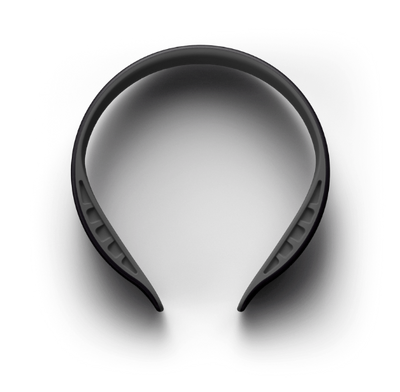
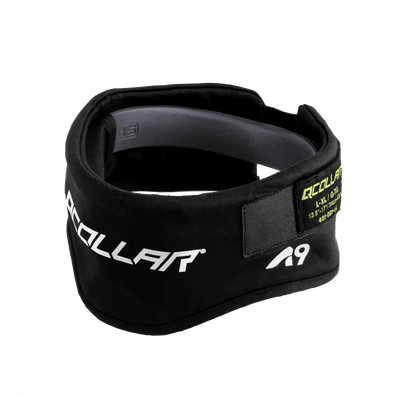
Devices designed to reduce brain movement during impact represent a newer layer in the protection approach. The Q-Collar, an FDA-cleared Class II medical device, applies light pressure to the sides of the neck to slightly increase blood volume inside the skull. This creates a tighter fit between the brain and skull, reducing the brain's movement upon impact.
The device is worn around the neck, below the helmet and above the shoulder pads. It does not interfere with existing equipment and is designed to work alongside helmets, not replace them.
How Professional Athletes Approach Brain Safety
Professional football players have access to the best equipment, medical staff, and training resources in the sport. Many have chosen to add brain protection devices to their equipment setups.
Sauce Gardner, cornerback for the New York Jets, wears a Q-Collar during games and practice. Logan Wilson, linebacker for the Cincinnati Bengals, has integrated the device into his routine. Drue Tranquill, linebacker for the Kansas City Chiefs and Super Bowl champion, is among the professional athletes who have adopted additional brain protection.
Other professional athletes wearing Q-Collars include Tony Pollard, running back for the Tennessee Titans, Dalton Schultz, tight end for the Houston Texans, Dalton Kincaid, tight end for the Buffalo Bills, and Byron Murphy, cornerback for the Minnesota Vikings.
These athletes are not making equipment decisions based on marketing claims. They have access to independent medical advice and performance data. Their choice to add a layer of brain protection reflects a broader shift in how players at all levels think about long-term brain health.
The Q-Collar: FDA-Cleared Brain Protection
The Q-Collar received FDA clearance in February 2021 as a Class II medical device designed to help protect the brain from the effects of repetitive sub-concussive head impacts in sports. The clearance followed review of clinical studies involving over 500 athletes across multiple sports, including football.
The device works by applying gentle pressure to the internal jugular veins on the sides of the neck. This pressure causes a slight increase in blood volume inside the skull. With more blood in the cranial space, the brain fits more snugly within the skull and moves less during impact.
The mechanism is similar to how a seatbelt reduces a passenger's movement during a car collision. The Q-Collar does not reduce blood circulation or blood flow through the carotid arteries. It does not interfere with breathing, performance, or communication.
Athletes wear the Q-Collar during all contact activities: games, scrimmages, and full-contact practices. The device is sized based on neck circumference, with numeric sizing from 11 to 18. Proper fit is important for both comfort and function.
The Q-Collar is designed as an additional layer of protection. It does not replace helmets, proper technique, or any other safety measure. It works alongside existing equipment to address the specific mechanism of brain injury: the brain's movement inside the skull during impact.
For families building a complete football safety setup, the Q-Collar product page covers pricing, sizing, and the full feature set, and the deeper sport-specific research is gathered on the Q-Collar in Football page.
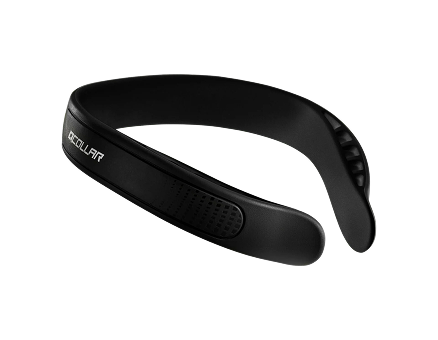
FOR ATHLETES
Q-Collar
The first and only FDA-cleared device designed to help protect the brain from the effects of repetitive sub-concussive head impacts in sports.
$199.00
Buy NowFrequently Asked Questions
How does the Q-Collar help protect the brain?
The Q-Collar is FDA-cleared to help protect the brain from the effects of repetitive sub-concussive head impacts. However, the FDA states that "data do not demonstrate that the device can help protect the brain or serious brain injury." The Q-Collar is designed as an additional layer of protection to be used alongside helmets and other sport-appropriate protective equipment, not as a replacement for any existing gear.
What is the difference between a concussion and a sub-concussive impact?
A concussion is an acute traumatic brain injury that produces immediate symptoms such as headache, confusion, dizziness, or nausea. A sub-concussive impact is a hit to the head that does not produce immediate symptoms but still causes the brain to move inside the skull. Research has shown that cumulative sub-concussive impacts over a season can create measurable structural changes in the brain even in athletes who never experience a diagnosed concussion.
How does the Q-Collar work?
The Q-Collar applies light, comfortable pressure to the sides of the neck, which partially occludes the internal jugular veins. This causes a slight increase in blood volume inside the skull. With more blood in the cranial space, the brain fits more snugly within the skull and moves less during impact. The device does not reduce blood circulation or blood flow through the carotid arteries and does not interfere with breathing or performance.
Can my athlete wear the Q-Collar with a football helmet?
Yes. The Q-Collar is designed to be worn around the neck, below the helmet and above the shoulder pads. It does not interfere with existing football equipment and should be integrated as an additional layer of protection alongside helmets, mouthguards, and proper technique.
What does the research say about football and brain safety?
A study published in the British Journal of Sports Medicine involving 42 high school football players observed that athletes wearing an additional layer of brain protection showed no significant white matter changes on DTI imaging at the end of a season, while control-group athletes with similar head impact exposure showed measurable changes. Other research has documented that most head impacts in football occur during practice rather than games, and that cumulative impact load varies by position, with linemen experiencing the highest frequency of impacts.
How do I know what size Q-Collar to order?
Q-Collar sizing is based on neck circumference measured in inches. Use a soft measuring tape at mid-neck, pull it snug with zero slack, and measure three times. Use the smallest measurement. If your athlete falls between two sizes, choose the smaller size for proper fit and function. The Q-Collar product page includes a detailed sizing guide and measurement instructions.
Where can I buy the Q-Collar?
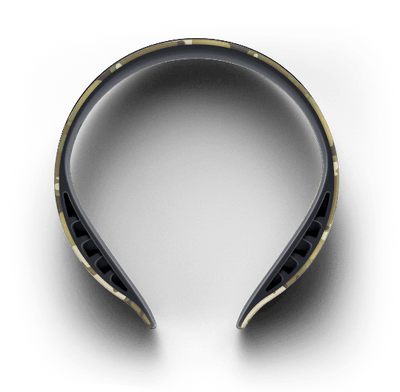
The Q-Collar is available directly from q30.com and through select retail locations. Use the store locator to find a retailer near you. The standard Q-Collar is $199, and optional sleeves in team colors are sold separately.
Are professional football players using the Q-Collar?
Yes. Professional athletes including Sauce Gardner (New York Jets), Logan Wilson (Cincinnati Bengals), Drue Tranquill (Kansas City Chiefs), Tony Pollard (Tennessee Titans), Dalton Schultz (Houston Texans), Dalton Kincaid (Buffalo Bills), and Byron Murphy (Minnesota Vikings) have integrated the Q-Collar into their equipment setups. These athletes have access to independent medical advice and performance data, and their choice to add brain protection reflects a broader shift in how players approach long-term brain health.