

Summary
- About 7 of every 10 emergency department visits for sports and recreation traumatic brain injuries involve children 17 and under, according to CDC HEADS UP data.
- The American Academy of Pediatrics has updated its guidance to incorporate the Amsterdam 2023 consensus, broadening prevention strategies beyond acute concussion management alone.
- Research at the Boston University CTE Center has associated earlier age of contact-sport exposure with measurable changes in adult brain markers, reinforcing the focus on cumulative exposure.
- Female adolescent athletes are at elevated concussion risk compared with male peers in sex-comparable sports, and reported recovery patterns differ.
- A layered approach (helmets, mouthguards, technique training, recognition protocols, and the Q-Collar for athletes 13+) addresses both single-event concussions and the cumulative load of sub-concussive impacts.
Youth Sports Table of Contents
- The state of youth sports brain injuries today
- Concussions vs. sub-concussive impacts
- Where head impacts actually accumulate
- What current AAP and consensus guidance says
- A layered approach to brain safety
- Where the Q-Collar fits in the layered approach
- Questions parents should ask coaches and athletic trainers
- Frequently Asked Questions
Most parents of youth athletes know the broad strokes: concussions are a real concern, helmets matter, and "when in doubt, sit them out" has become a household phrase. What is less well understood is the picture beneath the surface, which is how cumulative head impacts that produce no symptoms in the moment can still register on brain imaging at the end of a season, and how that exposure compounds across years of participation.
The good news for 2026 is that researchers, pediatricians, and governing bodies have moved past the idea that brain safety in youth sports is only about concussions. Updated guidance, longer-running studies, and better measurement tools have given parents a clearer view of where the risk is, what the evidence supports, and how to build a sensible safety plan around the athletes in their household. The goal of this piece is to walk through that picture in plain language, then translate it into practical decisions a parent can make this season.
The state of youth sports brain injuries today
The CDC's HEADS UP program is the most reliable starting point for parents who want a snapshot of the landscape. According to current CDC data, about 7 of every 10 emergency department visits for sports and recreation related traumatic brain injuries involve children 17 and under. Within that group, contact sports including football, basketball, and soccer account for about 45 percent of those ED visits.
The mechanism varies by sport. CDC data attribute almost 2 of 3 high school football concussions to tackling. In girls' high school basketball, about half of concussions result from collisions with other athletes, and in soccer, heading is responsible for a meaningful share of concussions in both boys and girls, with girls reporting a higher rate of heading-related injuries. None of this is intended to discourage participation. Youth sports deliver clear physical, social, and developmental benefits. The point is that the risk is real, measurable, and unevenly distributed across sports, positions, and sexes, and the response should be matched to the actual exposure rather than averaged across "youth sports" as a single category.
Concussions vs. sub-concussive impacts
Brain injury in sports is not a single problem. It is at least two related problems that researchers and clinicians have come to treat differently.
A concussion is a clinical injury, an acute disruption of brain function caused by a blow to the head, neck, or body that transmits force to the brain. Concussions are typically diagnosed based on symptoms (headache, confusion, dizziness, sensitivity to light or sound, memory issues), neurocognitive testing, and a clinical exam. They are the visible part of the iceberg.
A sub-concussive impact is a smaller hit that does not produce diagnosable symptoms in the moment but still transmits force to the brain. A youth football player can absorb hundreds of these in a single season of practice and games. None of them on their own would land an athlete in the concussion protocol. The concern is that they accumulate. Researchers have used diffusion tensor imaging (DTI), a technique that measures the integrity of white matter pathways in the brain, to look at this cumulative load. Several studies have observed measurable changes in white matter from a single season of repetitive head impact exposure in youth and high school athletes, including a 2019 study indexed on PubMed that quantified this association using imaging analysis.
The mechanism behind both injuries is similar at the level of the brain itself. Inside the skull, the brain sits in cerebrospinal fluid with some room to move. When the head accelerates and decelerates rapidly during a hit, the brain shifts inside the skull, stretching and compressing nerve fibers. Researchers sometimes call this "brain slosh." A single high-magnitude slosh can cause a concussion. Many smaller sloshes over a season can leave a measurable signature on imaging without ever producing acute symptoms. Both ends of that spectrum are part of the brain safety conversation in 2026.
Worth noting: not every study on sub-concussive exposure shows the same pattern. A 2021 study published in the Journal of Child Neurology tracked 29 youth football players ages 9 to 11 across three seasons and reported no meaningful association between cumulative head impacts and overall neurobehavioral performance. The honest read of the evidence is that the imaging signal is consistent across multiple cohorts, while the link from imaging changes to long-term cognitive or behavioral outcomes is still an active area of research.
Where head impacts actually accumulate
One of the most useful insights from a decade of head impact sensor research is that exposure is not where parents often assume it is. Three patterns have emerged that matter for any parent thinking about safety planning.
Practice contributes meaningfully to total load
Game day is where most parents picture the biggest hits, and it is true that high-magnitude impacts cluster in games. A 2021 study in the American Journal of Sports Medicine using mouthguard sensors in 524 youth athletes ages 6 to 14 found that tackle football players sustained roughly twice as many high-magnitude impacts (40g and above) during games than practices. But because there are typically more practices than games in a season, total cumulative exposure depends heavily on what happens at practice. Research has associated higher practice impact frequency with higher game impact frequency in the same players, suggesting that practice is a meaningful component of season load, not a low-stakes warmup.
Tackle vs. flag is a different exposure profile entirely
The CDC's analysis of head impact data for ages 6 to 14 reported that youth tackle football athletes sustained about 15 times more head impacts overall, and 23 times more high-magnitude impacts, than their flag football peers per practice and game. For families weighing youth football at younger ages, that is a useful number to put alongside any other consideration.
Age of first exposure and cumulative years matter
Boston University CTE Center researchers published findings in 2023 identifying ages 10 to 12 as a sensitive period of brain maturation, and reporting that earlier age of first tackle football exposure was associated with measurable differences in adult brain markers. A separate BU analysis of 211 former players reported that participating in tackle football before age 12 was associated with earlier onset of cognitive, behavior, and mood symptoms by an average of 13 years. The broader principle is that cumulative exposure starting in formative years has been associated with measurable downstream effects, which makes total season load worth tracking once an athlete reaches an age where additional protective options become available.
Female athletes carry elevated risk in sex-comparable sports
A 2019 systematic review and meta-analysis indexed on PubMed reported that in sex-comparable sports, female athletes had a 1.4 times higher overall concussion incidence rate than male athletes, with the largest disparities in soccer and basketball. A 2021 study in the American Journal of Sports Medicine drawing on more than 16,000 baseline assessments of adolescents 12 to 22 reported elevated odds of concussion and higher post-injury symptom severity among female athletes. CDC data add that about 1 in 3 concussions among girls happens during heading, compared with about 1 in 4 among boys. Girls playing sex-comparable sports are not at the same baseline as boys playing the same sport, and that should factor into family-level safety planning.
What current AAP and consensus guidance says
In 2024, the American Academy of Pediatrics published Pediatric Sport-Related Concussion: Recommendations From the Amsterdam Consensus Statement 2023 in the journal Pediatrics. The clinical report draws on the 6th International Consensus on sport-related concussion (Amsterdam, 2022) and translates it for pediatric and adolescent care.
The recommendations apply to children (5 to 12) and adolescents (13 to 18), and the AAP has updated its guidance to incorporate broader prevention strategies, not only acute concussion management. Specific items pediatricians and parents should know include:
- Mouthguards as a recommended layer in collision sports, with current evidence reported as supporting their use in youth ice hockey for concussion risk reduction.
- Neuromuscular training programs as a prevention strategy in soccer and rugby contexts.
- Policy changes in youth ice hockey, including continued recommendations against bodychecking before age 13.
- Standardized concussion recognition tools (the SCAT6 family of assessments) and structured return-to-learn and return-to-sport protocols.
- An emphasis on rest in the first 24 to 48 hours, followed by a graded return to symptom-limited activity rather than indefinite total rest.
The AAP's framing is significant. Past guidance leaned heavily on managing concussions after they happened. Current guidance treats prevention, recognition, and recovery as a continuous system, which is the same framing parents should apply at the household level.
A layered approach to brain safety
Single interventions do not solve youth sports brain safety. Layers do. A reasonable framework for parents looks like this:
Sport-appropriate, properly fitted equipment
Helmets in football, hockey, and lacrosse should be fitted by someone trained to do it, replaced on schedule, and inspected after significant impacts. Mouthguards should be worn consistently in any collision sport. Equipment that does not fit is functionally not protective.
Technique and neuromuscular training
Heads-up tackling, proper heading technique, and neck-strengthening programs have all been studied as prevention strategies. The evidence is strongest for neuromuscular training in soccer and rugby. Coaches who emphasize technique over volume are reducing exposure, not just teaching skill.
Practice volume and contact limits
Where coaches and leagues impose contact limits in practice, total season exposure drops. Parents can ask about practice plans and contact rules before the season starts, the same way they would ask about academic eligibility or injury policies.
Recognition and reporting culture
The CDC HEADS UP program publishes recognition resources for parents, coaches, and athletes. Symptoms can be subtle, particularly with adolescents who do not want to come out of a game. A culture in which an athlete believes self-reporting is encouraged and rewarded is the most powerful single intervention available, because no equipment can replace a player who tells someone they got their bell rung.
Return-to-learn and return-to-play protocols
Return is graded, supervised, and based on symptoms, not on a fixed clock. Schools and leagues following the Amsterdam 2023 consensus protocols are doing this correctly. Rushed returns are associated with worse recovery outcomes.
An additional layer of protection
For athletes 13 and older, the Q-Collar is one of the few sport-tested options researchers have studied as an additional layer alongside helmets and other gear, and it is the only FDA-cleared device in its category. It is not a replacement for any existing equipment. It is one item on the layered list.
Where the Q-Collar fits in the layered approach
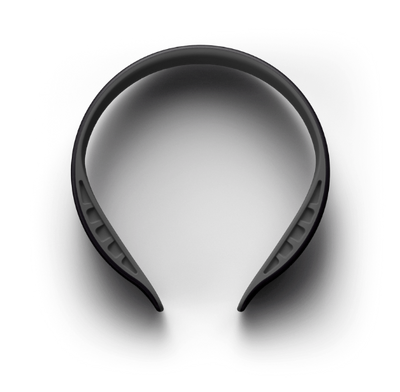
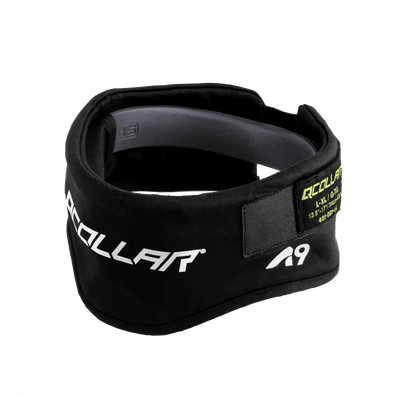
Q-Collar is an FDA-cleared Class II medical device worn around the neck during sports. The mechanism is straightforward and is documented on Q30's science page. The collar applies light, comfortable pressure to the sides of the neck, partially occluding the internal jugular veins. Blood volume inside the skull increases slightly, and the brain fits more snugly within the skull cavity. Upon impact, the brain moves less. A seatbelt analogy is useful. Seatbelts don't prevent crashes; they reduce how much the body moves during one.
The research base supporting Q-Collar's clearance includes:
- Football, 2016. A study published in the British Journal of Sports Medicine involving 42 high school football players observed that collar-wearing athletes showed no significant white matter changes on DTI imaging across a season, while the control group showed significant changes despite similar head impact exposure.
- Hockey, 2016. A pilot study in Frontiers in Neurology of 15 high school hockey players reported the same pattern: imaging changes in the control group, none in the collar group.
- Soccer feasibility, Cincinnati Children's Hospital. Researchers studied high school female soccer players and reported that the collar group showed no significant white matter changes, while control group changes only partially reversed during the off-season.
- FDA pivotal review, February 2021. The FDA reviewed data from, across multiple clinical studies before clearing the Q-Collar via the De Novo pathway as the first device of its kind designed to help protect the brain from effects associated with repetitive sub-concussive head impacts.
Across more than 25 peer-reviewed, independent research studies, more than 500 athletes have been studied, and over 500,000 total head impacts have been recorded and analyzed. Professional athletes across football, lacrosse, and soccer have added the Q-Collar to their gear as part of an additional layer of protection. The research is what it is: imaging-based observations from real athletes in real sports, framed as findings rather than guarantees. Parents weighing the device as part of a layered plan can read the data and decide. That is the right way to evaluate any piece of safety equipment.
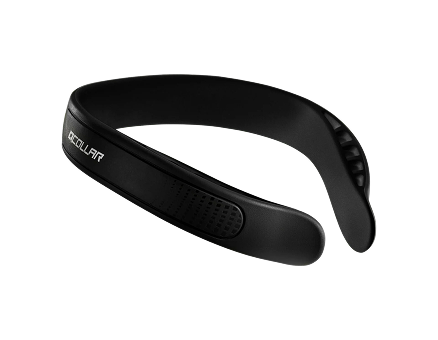
FOR ATHLETES 13+
Q-Collar
FDA-cleared to help protect athletes’ brains from the effects of repetitive sub-concussive head impacts.
$199.00
Buy NowQuestions parents should ask coaches and athletic trainers
An informed parent at the start of a season can change the safety profile of an athlete's year more than almost any other intervention. The questions below are practical, polite, and reasonable to ask in a preseason parent meeting or one-on-one with a coach, athletic director, or athletic trainer.
- What is the practice plan, and how do you limit unnecessary contact? Practice contact limits are one of the strongest levers a program has. If the answer is vague, ask for specifics.
- Who manages return-to-play decisions, and what protocol do you follow? The right answer mentions a licensed athletic trainer, team physician, or the athlete's pediatrician working from a written protocol consistent with current AAP and consensus guidance.
- Is an athletic trainer present at practices and games? Coverage at practice is often where programs differ. Most concussions are not catastrophic, but recognition and removal in the moment is what determines recovery.
- How is equipment fitting handled? Helmets and mouthguards that are not fitted correctly are not protective. Ask who fits, when fittings happen, and what the inspection schedule looks like.
- What technique training is in place? Heads-up tackling, proper heading technique, and neck-strengthening protocols should be part of the coaching plan in the relevant sports, not optional add-ons.
- Are there sport-specific contact rules at the youth level? Examples include bodychecking rules in hockey, heading restrictions in soccer at younger age groups, and kickoff rules in football.
- What is the policy if my athlete reports a possible concussion? The right answer treats self-reporting as a positive, not a problem. The wrong answer pressures athletes to keep playing.
- How can I track my athlete's exposure across the season? Some leagues now use mouthguard sensors or impact-tracking systems. Even informally, asking the question signals that the family takes cumulative load seriously.
Coaches and athletic trainers are partners in this. Most welcome questions from parents who are informed and not adversarial. The goal is not to interrogate. It is to understand the system the athlete is operating in and add the layers a family wants on top of it.
Frequently Asked Questions
Does the Q-Collar protect against concussions?
The Q-Collar is FDA-cleared to help protect the brain from the effects of repetitive sub-concussive head impacts. The FDA states that "data do not demonstrate that the device can prevent concussion or serious brain injury." The Q-Collar is designed as an additional layer of protection to be used alongside helmets and other sport-appropriate protective equipment, not as a replacement for any existing gear. No equipment can claim to prevent concussions. The Q-Collar is clinically validated to better protect the brain from the effects of head impacts.
Is the Q-Collar appropriate for kids?
The Q-Collar is FDA-cleared for athletes 13 and older. Parents of younger athletes should focus on the layered approach described above: sport-appropriate equipment, certified coaches, neuromuscular and technique training, written return-to-play protocols, and an athletic trainer presence at practices and games. The CDC HEADS UP program publishes excellent recognition and prevention materials for parents and coaches of younger athletes.
Does the Q-Collar replace helmets, mouthguards, or other gear?
No. The Q-Collar is designed to work with existing protective equipment, not in place of it. In football, it sits below the helmet and above the shoulder pads. In hockey, it fits under existing neck guards and below the helmet. In lacrosse, it provides an additional layer under the helmet. In soccer, it is worn alone around the neck. It is designed to not interfere with any other protective equipment.
What sports has the Q-Collar been studied in?
Peer-reviewed published research has included high school football (British Journal of Sports Medicine, 2016), high school hockey (Frontiers in Neurology, 2016), and high school female soccer (Cincinnati Children's Hospital).
Is there research specific to female athletes?
Yes. Cincinnati Children's Hospital studied high school female soccer players and reported that collar-wearing athletes showed no significant white matter changes during the season, while control group changes only partially reversed during the off-season. The broader concussion literature has consistently reported that female adolescent athletes face elevated risk in sex-comparable sports compared with male peers, which makes layered safety planning especially relevant for girls in soccer, basketball, and lacrosse. See the 2021 American Journal of Sports Medicine analysis for the supporting data.
How does the Q-Collar actually work?
The collar applies light, comfortable pressure to the sides of the neck. This pressure causes a partial occlusion of the internal jugular veins and a slight increase in blood volume inside the skull. The brain fits more snugly within the skull, and upon impact moves less, which reduces the stretching and compression of brain fibers (sometimes described as "brain slosh"). The Q-Collar does not reduce blood circulation or blood flow through the carotid arteries. More on the mechanism is documented on the Q-Collar science page.
Where can I buy the Q-Collar?
The Q-Collar is available at q30.com, as well as many retail locations.