

Q-Collar vs. Guardian Caps vs. Helmets: What's the Difference?
Summary
- Three different products. Three different problems. A helmet protects the skull from external impact. A Guardian Cap adds soft padding on top of the helmet to absorb energy at the point of contact. The Q-Collar is an FDA-cleared Class II medical device designed to help protect the brain from effects of repetitive sub-concussive head impacts.
- None of these devices replaces the others. They were designed for different jobs.
- The Q-Collar is not a helmet, not a Guardian Cap, and not a neck brace. It is the only FDA-cleared device in its category.
- In peer-reviewed clinical research, athletes who wore the Q-Collar showed no significant changes in brain white matter over a season of play on DTI imaging, while athletes who did not showed significant changes.
- The CDC HEADS UP program and the American Academy of Pediatrics both emphasize that cumulative head impact exposure in contact sports is a layered safety problem, which is why layered solutions matter.
- For a deeper look at how the Q-Collar differs from traditional neck protection, see neck rolls vs. Q-Collar and what pro football players wear on their necks.
Jump to a Section
Three Products. Three Jobs.
Search "Q-Collar vs Guardian Cap" and the question behind the query is almost always the same. A parent, a coach, or an athletic trainer is trying to figure out what to buy, in what order, and whether any one of these devices makes the others unnecessary. The short answer is no. These three products are not competing for the same job. Each one is designed to address a different part of the head impact problem.
That framing matters because the football safety conversation tends to be flattened into a single question: "does it work for concussions?" The reality is more layered. A football play produces multiple types of forces on the head and brain. A direct blow to the helmet shell. The rotation that comes after. The brain moving inside the skull. The neck twisting under load. Each of these has a different mechanism, and the devices that address them work in different ways.
The rest of this guide breaks down what each product is built to do, where their territories overlap, and where they do not. The goal is to give parents, coaches, and trainers a clear mental model so the next purchase decision is informed rather than reactive.
What a Helmet Is Designed to Do
The football helmet is the foundation of every conversation about head protection. It has been required equipment for more than a century, and it is the device every athlete already owns. Its job is specific and well understood.
A football helmet is engineered to absorb and distribute the force of a direct impact to the skull. The hard outer shell spreads the load across a wider area so that no single point of bone takes the full blow. The padding inside, whether foam or fluid-based, compresses to decelerate the head over a longer distance, which reduces peak force. This combination of distribution and deceleration is the entire mechanical purpose of a helmet.
What a helmet is designed to help reduce:
- Skull fracture from direct contact
- Facial injury
- Lacerations and contusions to the head
- Peak G-force at the moment of external impact
What a helmet is not designed to address:
- Brain movement inside the skull during and after impact
- Rotational acceleration of the brain
- Repetitive sub-concussive impact effects that accumulate across a season
This is not a flaw in helmet design. It is a limitation of the physics. A helmet works on the outside of the skull. The brain's movement happens on the inside.
What a Guardian Cap Is Designed to Do
The Guardian Cap is a soft padded cover that fits over the outside of a standard football helmet. Think of it as adding another energy-absorbing layer between the impacting surface and the helmet shell. The padding is designed to deform on contact, spreading the impact over a slightly longer time window and reducing peak force at the moment of collision.
Guardian Caps came into wider visibility through the NFL, which began permitting and then mandating their use in certain preseason and practice settings. Multiple levels of football, including youth and high school programs, have followed.
What a Guardian Cap is designed to help reduce:
- Peak impact force at the moment of helmet-to-helmet contact
- The harshness of contact during practice scenarios where repeated lower-velocity collisions are common
- Surface-level abrasion and energy transfer at the helmet shell
What a Guardian Cap is not designed to address:
- Brain movement inside the skull, which still happens regardless of how much padding sits outside the helmet
- Rotational forces transmitted through the helmet to the head
- The mechanical question of brain stability inside the cranium
The Guardian Cap and the helmet are doing the same kind of work, just in series. The Guardian Cap is the first layer of external absorption. The helmet is the second. Both operate on the outside of the body.
What the Q-Collar Is Designed to Do
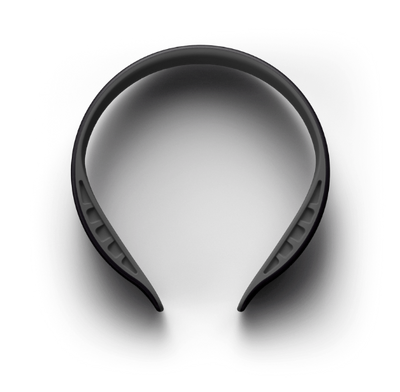
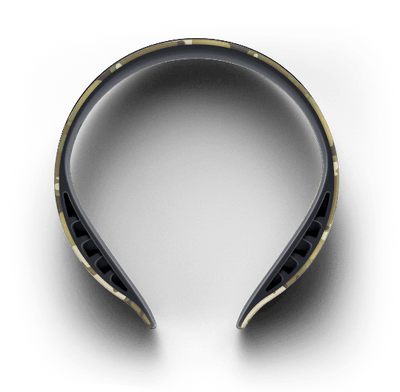
The Q-Collar is a different category of device. It is not a helmet, not a Guardian Cap, and not a neck brace. It is an FDA-cleared Class II medical device designed to help protect the brain from effects associated with repetitive sub-concussive head impacts.
The Q-Collar works by applying light, comfortable pressure to the sides of the neck, which causes a partial occlusion of the internal jugular veins. This slightly increases the volume of blood inside the skull, so the brain fits more snugly within the skull cavity. With less room to move, the brain shifts less during and after an impact — reducing what researchers call "brain slosh," the rapid movement that stretches and damages brain fibers. The Q-Collar does not reduce blood circulation or restrict blood flow through the carotid arteries; it acts only on the jugular veins. The effect is often compared to a seatbelt for the brain.
What the Q-Collar is designed to do:
- Help reduce the internal movement of the brain inside the skull during head impacts
- Provide an additional layer of protection focused on the effects of repetitive sub-concussive impacts
- Work with all existing protective equipment
What the Q-Collar is not:
- A helmet or helmet replacement
- A Guardian Cap or external padding
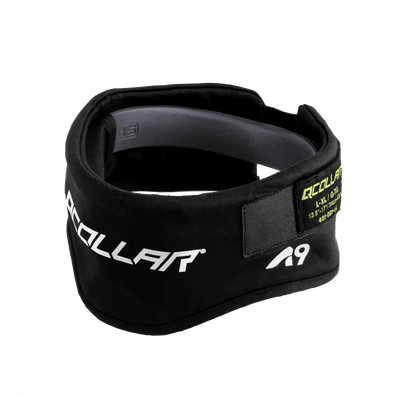
- A neck brace, neck roll, or cowboy collar
- A guarantee against any specific injury
In peer-reviewed clinical studies, athletes who wore the Q-Collar showed no significant changes in brain white matter over a season of play on DTI imaging, while athletes who did not wear it showed significant changes. For a closer look at how this category of protection developed and what the research base looks like, see a decade of sub-concussive impact research.
Side-by-Side Comparison
The fastest way to understand how these three devices relate is to put them next to each other. Each one is doing real work. The question is what kind of work.
| Helmet | Guardian Cap | Q-Collar | |
|---|---|---|---|
| Where it sits | On the head, hard shell | Over the helmet shell | Around the neck |
| What it acts on | External force to the skull | External force at the point of helmet contact | Blood volume inside the skull |
| Mechanism | Energy distribution and deceleration | Additional energy absorption layer | Light pressure partially occludes jugular veins, increasing blood volume in the skull so the brain fits snugly and moves less |
| Designed to help reduce | Skull fracture, facial injury, peak G-force | Peak impact force at helmet contact | Internal brain movement from repetitive sub-concussive impacts |
| FDA classification | Not a medical device | Not a medical device | FDA-cleared Class II medical device |
| Required by league rules | Yes, at all levels | Varies by league and setting | No, optional additional layer |
| Works with the others | Foundation device | Worn over the helmet | Worn under or alongside all other gear |
The table reads as three different stories. The helmet is the long-established foundation. The Guardian Cap is an added external layer at the point of impact. The Q-Collar is a separate category entirely, addressing the internal aspect of head impact that no external padding can reach.
How They Work Together (Not Against Each Other)
The most common misconception about layered head protection is that newer devices are competing with older ones. They are not. Each piece of equipment in a football player's loadout is doing something the others cannot.
Consider a single tackle. The helmet absorbs the direct blow to the head. A Guardian Cap, if worn, dampens the force at the moment of contact. Even with both in place, the head still accelerates. The brain, with its own momentum, still moves inside the skull. The Q-Collar is the device designed for that part of the chain. It does not stop the impact from happening. It helps stabilize what is happening to the brain in the moments after.
This is why all three can be worn together, and why doing so makes mechanical sense. They are sequential layers of protection, not alternative ones.
For coaches and athletic trainers building a complete safety stack, the layered model is the operating assumption. A properly fitted helmet is required and is the foundation. A Guardian Cap may be added based on league rules and practice context. The Q-Collar adds the internal brain-protection layer that no external padding is designed to address. Together they cover more of the impact chain than any one of them alone.
Which One Does a Player Need First?
For any football player at any level, a properly fitted, level-appropriate helmet is the non-negotiable first step. League rules require it, and no other equipment changes that. The helmet is the foundation. Everything else is layered on top.
The Guardian Cap question depends on context. Some leagues mandate its use in practice. Others permit it as optional. Many youth and high school programs are evaluating it. If a Guardian Cap is required or available at the player's level, adding it adds another layer of external absorption.
The Q-Collar question is about the brain itself. For players in contact sports, especially those with high cumulative impact exposure across a season, the Q-Collar is the only FDA-cleared device designed to help protect the brain from effects of repetitive sub-concussive impacts. It does not require waiting for a league mandate, because it is added voluntarily and does not interfere with any required equipment. For parents weighing the decision, see why youth football players should wear the Q-Collar. For coaches looking to lower cumulative exposure during practice itself, see football training drills that reduce practice impact.
The fastest practical framework: required gear first, optional external layers second, internal brain protection as the third complete layer of a serious safety setup.
Frequently Asked Questions
Does the Q-Collar replace a football helmet?
No. The Q-Collar is not a helmet and does not replace one. The Q-Collar is worn around the neck and applies light pressure to the jugular veins. It is designed to help protect the brain from effects of repetitive sub-concussive head impacts. A helmet is still essential for external skull protection. The two work together.
Does the Q-Collar replace a Guardian Cap?
No. A Guardian Cap is external padding that fits over the helmet shell, designed to absorb impact energy at the point of contact. The Q-Collar works differently and addresses a different aspect of head impact. Players can wear a Q-Collar with or without a Guardian Cap.
What is a Guardian Cap?
A Guardian Cap is a soft padded cover that fits over the outside of a standard football helmet. It is designed to add a layer of energy absorption between the impacting surface and the helmet shell. Guardian Caps have been used in NFL practices and at multiple levels of football.
Can a player wear all three at the same time?
Yes. A helmet, a Guardian Cap on top of the helmet, and the Q-Collar around the neck are compatible. Each device is designed for a different aspect of head impact protection.
Do these devices prevent concussions?
No equipment can claim to prevent concussions, however the Q-Collar is clinically validated to better protect the brain from the effects of head impacts. Helmets are designed to help reduce skull fractures and certain head injuries. Guardian Caps are designed to help reduce impact force at the point of contact.
Which one should I buy first?
A properly fitted helmet is required equipment for football and is the foundation. Beyond that, the decision depends on the level of play, position, and the player's history of head impacts. The Q-Collar is the only FDA-cleared device in its category and is the standard option for an additional layer of internal brain protection.
What does the research say about the Q-Collar?
In peer-reviewed clinical studies, athletes who wore the Q-Collar showed no significant changes in brain white matter over a season of play on DTI imaging, while athletes who did not wear it showed significant changes. The Q-Collar is the only FDA-cleared device in its category. See the published research.