

Cowboy Collar Football: Understanding Neck Rolls, Protective Collars, and Modern Brain Safety Equipment
Summary
- The traditional cowboy collar (neck roll) was designed to limit extreme neck extension and reduce cervical spine injury risk, not to protect against brain injury from impacts.
- Modern football safety research focuses on cumulative sub-concussive impacts, hundreds to thousands of hits absorbed throughout a season that may cause measurable brain changes even without diagnosed concussions.
- A British Journal of Sports Medicine study involving 42 high school football players found that athletes wearing a protective collar showed no significant white matter changes on brain imaging, while control athletes did despite similar impact exposure.
- The Q-Collar represents a different protective mechanism than traditional neck rolls, using light jugular vein compression to reduce brain movement inside the skull during impacts.
- Modern football safety approaches layer multiple protective technologies, helmets, shoulder pads, mouthguards, and additional brain protection devices, rather than relying on any single piece of equipment.
Jump to a Section
- What Is a Cowboy Collar in Football?
- The History of Neck Protection in Football
- Brain Protection vs. Neck Protection: Understanding the Difference
- The Science of Sub-Concussive Impacts in Football
- Modern Collar Technology: How the Q-Collar Works
- Building a Layered Protection Approach
- Q-Collar for Football Players
- Frequently Asked Questions
When parents and coaches research football safety equipment, the term "cowboy collar football" often appears alongside searches for neck protection and brain safety devices. Understanding the difference between traditional neck rolls, modern protective collars, and brain protection technology helps families make informed equipment decisions for young athletes.
The traditional cowboy collar, a padded horseshoe-shaped device worn around the base of the neck, has been part of football equipment for decades. But as our understanding of football-related brain injury has evolved, so has the technology designed to address it. This guide explains the history of collar-based protection in football, what modern research reveals about cumulative head impacts, and how today's protective equipment addresses both neck safety and brain protection.
What Is a Cowboy Collar in Football?
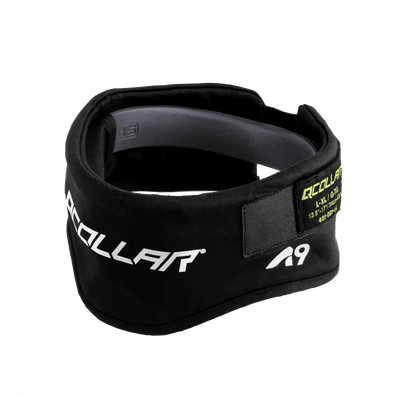
The cowboy collar, also called a neck roll, is a padded foam device that wraps around the back and sides of a football player's neck. It sits on top of the shoulder pads and below the helmet, creating a cushioned barrier that limits how far the head can tilt backward.
The original cowboy collar served a specific biomechanical purpose: preventing hyperextension of the cervical spine. When a player's head snaps backward during a tackle or collision, the neck roll provides a physical stop that reduces the range of motion. This design was particularly popular among defensive backs and linebackers who frequently made tackles in positions that put the neck at risk.
Traditional neck rolls come in several styles:
- Full horseshoe design: Wraps completely around the back and sides of the neck
- Butterfly style: Two separate foam pads that attach to the shoulder pads
- Integrated pads: Built directly into certain shoulder pad models
- Custom-molded options: Fitted to individual player neck measurements
The nickname "cowboy collar" likely originated from the device's visual similarity to the high collars worn in Western attire, though the exact origin of the term remains debated among equipment historians. What's clear is that the cowboy collar became a recognizable part of football culture, associated with hard-hitting defensive players throughout the 1980s and 1990s.
The History of Neck Protection in Football
Neck protection in football evolved alongside growing awareness of cervical spine injuries. In the 1970s and 1980s, catastrophic neck injuries, though rare, prompted equipment manufacturers and medical professionals to develop protective solutions.
The neck roll emerged as a practical answer. By limiting extreme neck extension and flexion, the device reduced the risk of certain types of cervical injuries. Players who wore them reported feeling more confident making tackles, knowing they had an additional layer of protection around a vulnerable area.
However, the cowboy collar was never designed to address brain injury. Its purpose was purely mechanical: control the range of motion in the cervical spine. The foam padding absorbed some force, but the primary function was positional, not impact-absorbing.
As helmet technology improved and rule changes reduced certain high-risk contact scenarios, the popularity of traditional neck rolls declined. Many modern players, particularly at youth and high school levels, no longer wear them. The equipment remains legal and available, but it has largely been replaced by integrated shoulder pad designs that incorporate neck protection directly into the pad structure.
Brain Protection vs. Neck Protection: Understanding the Difference
The distinction between neck protection and brain protection is critical for parents evaluating football safety equipment.
Neck protection devices like the traditional cowboy collar address cervical spine mechanics. They limit how far the neck can bend or extend, reducing strain on the vertebrae, discs, and surrounding soft tissue. This type of protection targets a specific anatomical region with a straightforward mechanical solution.
Brain protection addresses a different challenge entirely: what happens inside the skull when the head experiences sudden acceleration and deceleration. When a football player absorbs a hit, the brain can move within the skull, stretching and compressing brain tissue. This movement, often called "brain slosh," is associated with both acute concussions and the cumulative effects of repetitive sub-concussive impacts.
A traditional neck roll does not reduce brain movement inside the skull. It may prevent certain neck injuries, but it was not designed to address the primary mechanism of brain injury in football: the brain's movement relative to the skull during impact.
This distinction matters because modern football safety research has shifted focus from diagnosed concussions alone to the broader category of repetitive head impacts. A player might absorb hundreds of hits throughout a season, each one causing the brain to move slightly inside the skull, without ever being diagnosed with a concussion. Research published in the Journal of Neurotrauma and other peer-reviewed journals has documented measurable brain changes in athletes exposed to repetitive impacts, even when no single hit was severe enough to cause immediate symptoms.
The Science of Sub-Concussive Impacts in Football
Football players, particularly linemen, absorb contact on nearly every play. A study tracking high school football players found that some positions experience 600 to 1,500 head impacts over a single season. Most of these impacts are sub-concussive, meaning they do not produce the immediate symptoms associated with a diagnosed concussion: confusion, dizziness, headache, or loss of consciousness.
For years, the assumption was that if a hit didn't cause a concussion, it didn't cause harm. Modern imaging technology has challenged that assumption.
Diffusion tensor imaging (DTI), an advanced form of MRI, allows researchers to measure the structural integrity of white matter in the brain. White matter consists of nerve fibers that transmit signals between different brain regions. When these fibers are stretched or damaged, DTI can detect changes in how water molecules move along the fiber tracts.
A 2016 study published in the British Journal of Sports Medicine tracked 42 high school football players over a season. Researchers measured head impact exposure using helmet-mounted sensors and conducted DTI scans before and after the season. The control group, which wore standard equipment, showed measurable white matter changes despite the fact that none of the athletes sustained a diagnosed concussion during the season. The athletes who wore a protective collar showed no significant changes on the same imaging measures, even though both groups absorbed similar numbers and magnitudes of head impacts.
This finding, replicated across multiple studies involving more than 500 athletes and over 500,000 recorded head impacts, suggests that cumulative sub-concussive exposure may cause structural changes in the brain that are not immediately apparent through symptom evaluation alone.
The implications are significant for parents and coaches. Preventing diagnosed concussions is important, but it represents only part of the brain safety equation. Reducing the cumulative effects of repetitive impacts, the hits that happen on every snap, every practice, every game, may be equally important for long-term brain health.
Modern Collar Technology: How the Q-Collar Works
The Q-Collar represents a fundamentally different approach to protective equipment than the traditional cowboy collar. While the neck roll limits cervical spine motion, the Q-Collar addresses brain movement inside the skull.
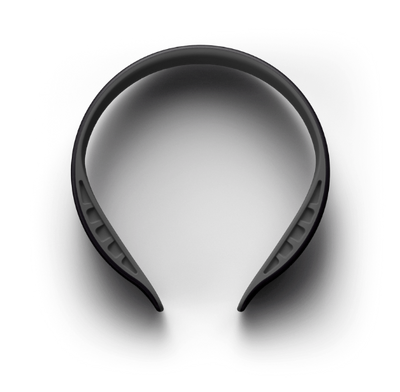
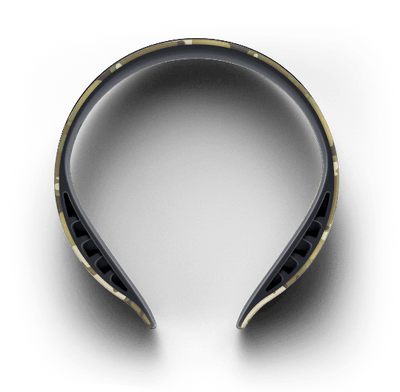
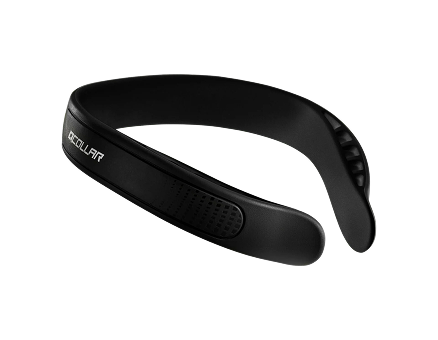
The device is a lightweight, C-shaped collar worn around the neck during sports. It applies gentle pressure to the sides of the neck, causing a slight compression of the internal jugular veins. This compression increases blood volume inside the skull by a small amount, which reduces the space available for the brain to move when the head experiences an impact.
The mechanism is similar to how a seatbelt works in a car. The seatbelt doesn't prevent the collision, but it reduces how far your body moves during the collision, minimizing injury. The Q-Collar doesn't prevent head impacts, but research suggests it may reduce how much the brain moves inside the skull when those impacts occur.
The science behind this mechanism was studied at the University Health Network in Toronto and published in the British Journal of Sports Medicine. Researchers used ultrasound to measure optic nerve sheath diameter, an indicator of intracranial volume, in 19 adults. When participants wore the Q-Collar, the measurement increased from 4.6mm to 4.9mm, confirming that jugular vein compression does increase blood volume inside the skull.
In February 2021, the Q-Collar became the first and only device in its category to receive FDA clearance as a Class II medical device. The FDA reviewed data from multiple prospective clinical studies involving high school and collegiate football players, among other athletes, before authorizing the device for use.
The Q-Collar does not interfere with breathing, blood flow to the brain, or athletic performance. It sits comfortably below the helmet and above the shoulder pads, adding no bulk to the player's profile. Professional football players, including New York Jets cornerback Sauce Gardner, Cincinnati Bengals linebacker Logan Wilson, and Buffalo Bills tight end Dalton Kincaid, wear the Q-Collar during games as part of their personal equipment setup.
Building a Layered Protection Approach
Modern football safety is not about choosing one piece of protective equipment over another. It's about layering multiple technologies to address different injury mechanisms.
A complete football protection setup includes:
- Helmet: The foundation of head protection, designed to absorb and distribute impact forces across the skull. Modern helmets incorporate advanced padding systems, shell designs, and fit technologies.
- Mouthguard: Protects teeth and jaw, and may help reduce certain types of impact transmission to the skull.
- Shoulder pads: Protect the shoulders, chest, and upper spine, and help distribute force away from the neck and head during certain types of contact.
- Brain protection device: The Q-Collar adds a layer of protection specifically designed to reduce brain movement inside the skull during impacts.
None of these devices, used alone, addresses every risk. But used together, they create a comprehensive approach that reduces injury risk across multiple mechanisms.
The CDC HEADS UP program emphasizes that equipment is only one component of football safety. Proper tackling technique, enforced practice contact limits, immediate concussion recognition and removal from play, and gradual return-to-play protocols all contribute to a culture of safety that protects young athletes.
Parents evaluating equipment options should consider how each piece fits into the broader safety picture. The Q-Collar is designed to work alongside existing protective equipment, not replace any of it. A football player wearing the Q-Collar still wears a helmet, still wears shoulder pads, and still follows all safety protocols established by coaches and athletic trainers.
Q-Collar for Football Players
For families building a complete football safety setup, the Q-Collar product page covers pricing, sizing, and the full feature set, and the deeper sport-specific research is gathered on the Q-Collar in Football page.
FOR ATHLETES
Q-Collar
The first and only FDA-cleared device designed to help protect the brain from the effects of repetitive sub-concussive head impacts in sports.
$199.00
Buy NowFrequently Asked Questions
Is a cowboy collar the same as the Q-Collar?
No. The traditional cowboy collar (neck roll) is a foam padding device designed to limit neck extension and reduce cervical spine injury risk. The Q-Collar is an FDA-cleared medical device that uses jugular vein compression to reduce brain movement inside the skull during impacts. They serve different protective purposes and use completely different mechanisms.
How does the Q-Collar help protect the brain?
The Q-Collar is FDA-cleared to help protect the brain from the effects of repetitive sub-concussive head impacts. However, the FDA states that "data do not demonstrate that the device can help protect the brain or serious brain injury." The Q-Collar is designed as an additional layer of protection to be used alongside helmets and other sport-appropriate protective equipment, not as a replacement for any existing gear.
Can football players wear both a neck roll and the Q-Collar?
Yes, if desired. The Q-Collar sits around the neck below the helmet and above the shoulder pads. A traditional neck roll sits on top of the shoulder pads. The two devices occupy slightly different positions and serve different protective functions, so they can be worn together if an athlete and their family choose to do so. However, most modern football players who wear the Q-Collar do not also wear a traditional neck roll, as integrated shoulder pad designs have largely replaced standalone neck rolls in contemporary equipment setups.
How is the Q-Collar sized for football players?
The Q-Collar is sized numerically (11 through 18) based on neck circumference measured in inches. To measure, use a soft fabric measuring tape at mid-neck height, pull it snug with zero slack, and measure three times. Use the smallest of the three measurements. If the measurement falls between two sizes, choose the smaller size for proper fit. The device should feel snug but comfortable, similar to a snug shirt collar.
What research supports the Q-Collar for football?
A 2016 study published in the British Journal of Sports Medicine tracked 42 high school football players over a season. Athletes wearing the collar showed no significant white matter changes on DTI brain imaging, while the control group showed measurable changes despite similar head impact exposure. The FDA reviewed data from over 500 athletes across multiple prospective clinical studies, including football-specific research, before clearing the device in February 2021.
Does the Q-Collar interfere with football helmets or shoulder pads?
No. The Q-Collar is designed to fit seamlessly with existing football equipment. It sits below the helmet and above the shoulder pads, adding minimal bulk. Professional football players wear it during games without any interference with their standard protective equipment. The device should never interfere with helmet fit, shoulder pad positioning, or range of motion required for athletic performance.
Where can I buy the Q-Collar for my football player?
The Q-Collar is available directly from q30.com for $199, and through authorized retail locations nationwide. Use the store locator to find retailers near you that carry Q-Collar products and can assist with sizing and fit.
What positions in football benefit most from the Q-Collar?
All football positions absorb repetitive head impacts, though the frequency and type vary. Linemen experience contact on nearly every play. Linebackers and running backs absorb high-magnitude collisions. Defensive backs and wide receivers experience impacts during tackles and blocking. Research has documented sub-concussive impact exposure across all positions, suggesting that brain protection technology may benefit any athlete playing contact football, regardless of position.