

Football Neck Roll vs. Q-Collar: Understanding Modern Neck Protection for Brain Safety
Summary
- Traditional football neck rolls stabilize the head-neck junction and reduce hyperextension injuries, but they do not address brain movement inside the skull during impacts.
- The Q-Collar is an FDA-cleared device that applies light jugular vein compression to reduce brain slosh, the stretching and tearing of brain tissue that occurs when the brain moves rapidly inside the skull.
- Research published in the British Journal of Sports Medicine involving 42 high school football players found that athletes wearing the collar showed no significant white matter changes on brain imaging, while control athletes showed measurable changes despite similar head impact exposure.
- Football players absorb hundreds, sometimes thousands, of sub-concussive impacts per season, most of them during practice rather than games, according to data from the Boston University CTE Center.
- Modern football safety requires a layered approach where helmets, shoulder pads, neck rolls, and brain protection devices work together as complementary layers, not competing alternatives.
Jump to a Section
- What Is a Football Neck Roll?
- How Traditional Neck Rolls Work
- The Brain Movement Problem Neck Rolls Don't Address
- How the Q-Collar Reduces Brain Slosh
- Research Findings in Football Players
- Equipment Compatibility: Neck Roll and Q-Collar Together
- Why Pro Football Players Wear the Q-Collar
- Product Information
- Frequently Asked Questions
When parents and coaches evaluate football safety equipment, the football neck roll often comes up as a familiar piece of protective gear. Neck rolls have been part of the game for decades, designed to limit extreme head and neck movements during collisions. But as research into brain injury has advanced, a new category of protection has emerged that addresses a different mechanism: brain movement inside the skull.
Understanding the difference between what a traditional football neck roll does and what modern brain protection technology like the Q-Collar does requires looking at two distinct injury mechanisms. One involves the neck and spine. The other involves the brain itself.
What Is a Football Neck Roll?
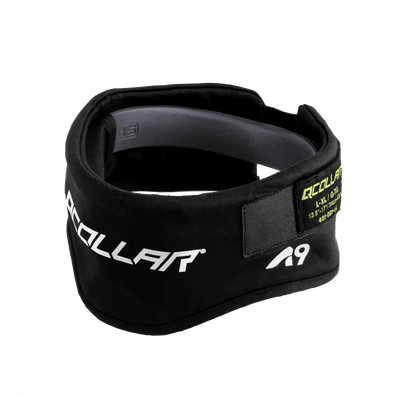
A football neck roll, sometimes called a cowboy collar when it extends higher up the neck, is a padded collar that sits on top of the shoulder pads and wraps around the base of the neck. The padding is typically made of dense foam or gel-filled material encased in a fabric cover.
Neck rolls became popular in football during the 1980s and 1990s, particularly among defensive backs, linebackers, and running backs who frequently experience contact from multiple angles. The device restricts how far the head can tilt backward (hyperextension) or to the side during a tackle or collision.
The primary function of a football neck roll is mechanical stabilization. By limiting the range of motion at the head-neck junction, the device reduces the risk of cervical spine injuries such as stingers, burners, and more serious neck trauma. It acts as a physical barrier that prevents the head from snapping back violently when a player is hit from the front or side.
Neck rolls are not required equipment in most football leagues, but many players choose to wear them for added protection. They are particularly common among players in positions where helmet-to-helmet contact or blindside hits are frequent.
How Traditional Neck Rolls Work
The football neck roll works through passive restriction. When a player's head is forced backward or sideways during a collision, the padding contacts the back of the helmet and the top of the shoulder pads, creating a mechanical stop that limits further movement.
This restriction serves several purposes. It reduces the strain on cervical ligaments and muscles during sudden deceleration. It helps prevent the kind of whiplash motion that can cause nerve compression injuries like stingers, which produce temporary numbness or burning sensations down the arm. And in extreme cases, it may reduce the risk of more severe cervical spine injuries.
What the football neck roll does not do is address what happens inside the skull during an impact. When a player's head decelerates rapidly, whether the neck is stabilized or not, the brain continues moving forward briefly before rebounding backward. This motion, called brain slosh, stretches and tears the delicate white matter fibers that connect different regions of the brain.
Neck stabilization and brain protection are separate problems that require separate solutions.
The Brain Movement Problem Neck Rolls Don't Address
Brain injury in football occurs primarily through a mechanism that has nothing to do with neck position. When the head absorbs a hit, the skull decelerates almost instantly. The brain, which floats in cerebrospinal fluid inside the skull, does not decelerate at the same rate. It continues moving, stretching and compressing against the inside of the skull.
This movement causes two types of injury. The first is the stretching and tearing of axons, the long fibers that transmit signals between neurons. When these fibers are damaged, communication between brain regions becomes disrupted. The second is bruising where the brain contacts the inner surface of the skull, particularly at the frontal and temporal lobes.
Research from the Boston University CTE Center has documented that football players absorb hundreds of these impacts per season, most of them during practice. The majority of these hits do not produce concussion symptoms. They are sub-concussive impacts, hits that feel routine to the player but still cause the brain to move inside the skull.
Over time, the cumulative effect of these sub-concussive impacts has been associated with measurable changes in brain structure. Advanced imaging studies using diffusion tensor imaging (DTI) can detect changes in white matter integrity, even in athletes who have never been diagnosed with a concussion.
The football neck roll, because it stabilizes the neck rather than the brain, does not reduce this internal brain movement. A player wearing a neck roll still experiences the same brain slosh during an impact as a player without one. The neck may be more stable, but the brain is not.
How the Q-Collar Reduces Brain Slosh
The Q-Collar addresses brain movement through a completely different mechanism. Instead of restricting head or neck motion, it changes the environment inside the skull to reduce how much the brain can move during an impact.
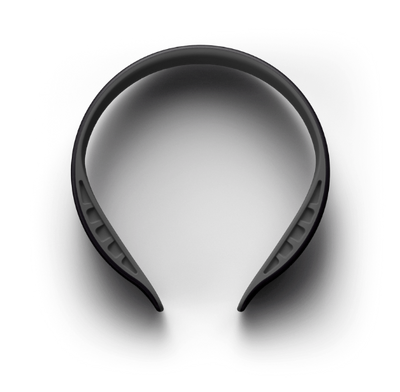
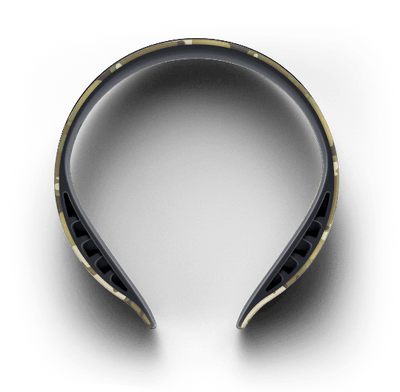
The device is a C-shaped collar worn around the neck during play. It applies light, comfortable pressure to the sides of the neck over the internal jugular veins. This pressure causes a partial occlusion of the veins, which slightly increases the volume of blood inside the skull.
When blood volume inside the skull increases, the brain fits more snugly within the skull cavity. There is less space for the brain to accelerate and decelerate during an impact. The result is reduced brain slosh, the primary mechanism of brain injury from head impacts.
A study published in the British Journal of Sports Medicine involving 19 adults confirmed this mechanism. Researchers measured optic nerve sheath diameter, a proxy for intracranial volume, before and after jugular vein compression. The diameter increased from 4.6mm to 4.9mm, indicating that blood volume inside the skull had increased as expected.
The Q-Collar does not reduce blood circulation or blood flow through the carotid arteries. The jugular veins carry blood away from the brain, not to it. Compressing the veins slightly slows the drainage of blood from the skull, which increases intracranial blood volume without affecting oxygen delivery or arterial flow.
The device is designed to work alongside existing protective equipment. It sits below the helmet and above the shoulder pads in football, fitting into the same space where a traditional football neck roll might sit. Some players wear both a neck roll and the Q-Collar, using the neck roll for cervical stabilization and the Q-Collar for brain protection.
Research Findings in Football Players
The most direct evidence for the Q-Collar's effectiveness in football comes from a study published in the British Journal of Sports Medicine in 2016. Researchers at Cincinnati Children's Hospital followed 42 high school football players over a full season. Half wore the Q-Collar during all practices and games. The other half served as a control group wearing no collar.
All players wore helmet-mounted sensors that recorded the number, location, and magnitude of head impacts throughout the season. At the end of the season, all players underwent brain imaging using diffusion tensor imaging (DTI), a technique that measures the integrity of white matter fibers.
The control group showed significant changes in white matter structure compared to their pre-season baseline scans. The collar-wearing group showed no significant changes. Both groups experienced similar head impact exposure, meaning they absorbed a similar number and severity of hits. The difference was in how those impacts affected the brain.
The study did not claim that the Q-Collar helps protect the brain. It measured sub-concussive impact effects, the kind of routine hits that occur on nearly every play in football. The findings suggest that reducing brain movement during these impacts is associated with less measurable change to brain structure over a season.
This research has been part of the evidence reviewed by the FDA, which cleared the Q-Collar as a Class II medical device in February 2021. The FDA clearance states that the device is designed to help protect the brain from the effects of repetitive sub-concussive head impacts in sports.
Additional research involving over 500 athletes across multiple sports, including football, has been published in peer-reviewed journals. The cumulative body of evidence spans more than 10 years and includes analysis of over 500,000 recorded head impacts.
Equipment Compatibility: Neck Roll and Q-Collar Together
One question parents and coaches frequently ask is whether a football neck roll and the Q-Collar can be worn together. The answer is yes, and many players do exactly that.
The two devices serve different functions and occupy slightly different spaces. A traditional football neck roll sits on top of the shoulder pads and extends up to the base of the helmet. The Q-Collar sits lower on the neck, below where the helmet rests and above the shoulder pad line.
In practice, a player wearing both devices benefits from cervical stabilization (from the neck roll) and reduced brain slosh (from the Q-Collar). The neck roll limits extreme head movements that could cause neck injuries. The Q-Collar reduces internal brain movement during the impacts that occur within the normal range of head motion.
The Q-Collar is designed to not interfere with any existing protective equipment. It does not restrict breathing, does not limit head or neck mobility beyond what the player's helmet and pads already require, and does not create pressure points or discomfort during play.
For players who prefer the feel and protection of a football neck roll, adding the Q-Collar simply provides an additional layer of protection focused on a different injury mechanism. For players who do not wear a neck roll, the Q-Collar can be worn alone without any equipment compatibility issues.
Why Pro Football Players Wear the Q-Collar
At the professional level, where players have access to the most advanced equipment and medical staff, adoption of the Q-Collar has grown steadily since its FDA clearance. Pro athletes including Sauce Gardner of the New York Jets, Logan Wilson of the Cincinnati Bengals, Tony Pollard of the Tennessee Titans, and Dalton Kincaid of the Buffalo Bills wear the device during games and practice.
These players represent a range of positions: cornerbacks, linebackers, running backs, and tight ends. What they share is frequent exposure to head impacts and a recognition that brain protection requires more than a helmet.
Professional athletes often describe the Q-Collar as part of a complete equipment setup rather than a standalone device. They wear it alongside their helmet, pads, mouthguard, and in some cases a football neck roll. The goal is layered protection, where each piece of equipment addresses a specific injury risk.
For parents evaluating equipment for youth or high school players, the fact that professional athletes choose to wear the Q-Collar provides a useful reference point. These are players with access to every available technology, advised by team physicians and athletic trainers. Their adoption of the device reflects the growing understanding that brain protection requires addressing brain movement, not just head or neck stabilization.
Product Information
For families building a complete football safety setup, the Q-Collar product page covers pricing, sizing, and the full feature set, and the deeper sport-specific research is gathered on the Q-Collar in Football page.
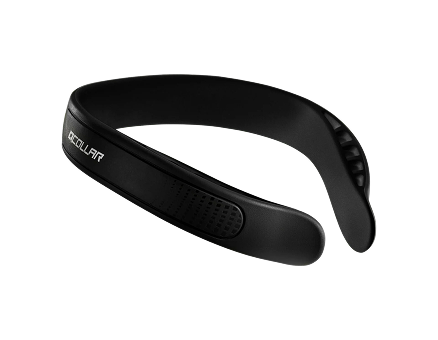
FOR ATHLETES
Q-Collar
The first and only FDA-cleared device designed to help protect the brain from the effects of repetitive sub-concussive head impacts in sports.
$199.00
Buy NowFrequently Asked Questions
How does the Q-Collar help protect the brain?
The Q-Collar is FDA-cleared to help protect the brain from the effects of repetitive sub-concussive head impacts. However, the FDA states that "data do not demonstrate that the device can help protect the brain or serious brain injury." The Q-Collar is designed as an additional layer of protection to be used alongside helmets and other sport-appropriate protective equipment, not as a replacement for any existing gear.
Can a player wear both a football neck roll and the Q-Collar?
Yes. Many players wear both devices together. The football neck roll sits on top of the shoulder pads and limits extreme head and neck movements. The Q-Collar sits lower on the neck and reduces brain movement inside the skull. The two devices serve different functions and do not interfere with each other.
How does the Q-Collar differ from a traditional football neck roll?
A football neck roll provides mechanical stabilization of the head and neck to reduce cervical spine injuries. The Q-Collar addresses a different mechanism: it applies light pressure to the jugular veins to slightly increase blood volume inside the skull, which reduces how much the brain can move during an impact. One stabilizes the neck; the other reduces brain slosh.
What research supports the Q-Collar in football?
A study published in the British Journal of Sports Medicine followed 42 high school football players over a full season. Players wearing the Q-Collar showed no significant white matter changes on brain imaging, while control players showed measurable changes despite similar head impact exposure. The FDA reviewed data from over 500 athletes across multiple prospective studies before clearing the device in February 2021.
Is the Q-Collar comfortable to wear during a football game?
Yes. The Q-Collar is designed to apply light, comfortable pressure to the neck. It does not restrict breathing, does not limit head or neck mobility beyond what the helmet and pads already require, and does not create pressure points. Players report that it becomes unnoticeable during play.
Do professional football players wear the Q-Collar?
Yes. Pro athletes including Sauce Gardner (New York Jets), Logan Wilson (Cincinnati Bengals), Tony Pollard (Tennessee Titans), Dalton Kincaid (Buffalo Bills), and others wear the Q-Collar during games and practice. These players represent multiple positions and have access to the most advanced equipment and medical staff available.
How is the Q-Collar sized for football players?
The Q-Collar uses numeric sizing (11-18) based on neck circumference measured in inches. To find the correct size, measure the neck at mid-level with a soft tape measure pulled snug with zero slack. Measure three times and use the smallest measurement. If between sizes, choose the smaller size. The product page includes a detailed sizing guide.
Does the Q-Collar replace a helmet or other protective equipment?
No. The Q-Collar is designed to work with existing protective equipment, not replace it. Football players should continue wearing a properly fitted helmet, shoulder pads, mouthguard, and any other equipment recommended for their position. The Q-Collar provides an additional layer of protection focused on reducing brain movement inside the skull.