

The Q-Collar
Summary
- A neck-worn device visible on professional football fields applies light pressure to the jugular veins, slightly increasing blood volume inside the skull to reduce brain movement during impacts.
- Clinical research published in the British Journal of Sports Medicine involving high school football players observed measurable differences in white matter changes between athletes wearing the collar and control groups over a season.
- The Q-Collar received FDA clearance in February 2021 as a Class II medical device after review of data from over 500 athletes across multiple prospective studies.
- Post-mortem research from the Boston University CTE Center has documented brain changes in former professional athletes associated with cumulative exposure to repetitive head impacts, not just diagnosed concussions.
- Parents of youth athletes are evaluating the device as one layer in a broader equipment strategy alongside helmets, mouthguards, and proper coaching on technique.
In This Piece
- The Quiet Equipment Shift Most Parents Haven't Noticed
- What Happens Inside the Skull During Contact
- What Researchers Have Actually Measured
- Where Cumulative Exposure Hides
- How Jugular Compression Changes the Equation
- Equipment Becomes a Layered System
- What Parents Need to Know About the Device
- Frequently Asked Questions
If you've watched a professional football game in the past few seasons, you may have noticed something new. Not a helmet redesign. Not a visor. A band worn around the neck, visible just above the shoulder pads, in team colors or plain black.
It's appearing on linebackers, running backs, defensive backs and more. Players who absorb contact on nearly every snap. And while most viewers scroll past it without a second thought, parents of youth football players are starting to ask questions.
What is that device? Why are professional athletes adding another piece of equipment to an already crowded gear list? And does it matter for a high school sophomore playing Friday night football in suburban Ohio?
The answer involves a shift in how researchers, equipment designers, and medical professionals think about brain protection in contact sports. Not just the big hits that make highlight reels. The smaller ones. The routine collisions that happen dozens of times per practice, hundreds of times per season, and leave no visible mark.
The Quiet Equipment Shift Most Parents Haven't Noticed
The collar worn by players like Dalton Kincaid, Tight End for the Buffalo Bills, and Sauce Gardner, cornerback for the Indianapolis Colts, isn't decorative. It's a medical device cleared by the FDA in February 2021 after a multi-year review process.
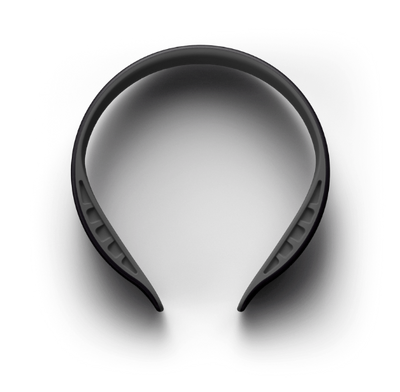
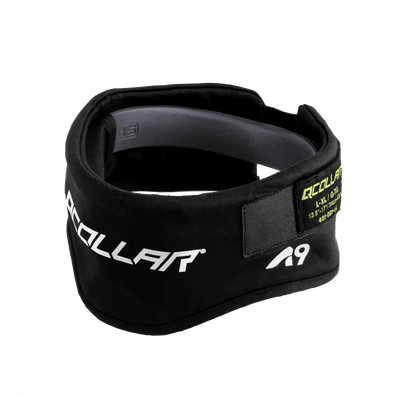
The Q-Collar applies light, calibrated pressure to the sides of the neck. This pressure partially restricts the internal jugular veins, which carry blood away from the brain. The result is a slight increase in blood volume inside the skull. Think of it as reducing the empty space around the brain, so when impact occurs, the brain has less room to accelerate and decelerate inside the skull cavity.
The concept isn't new in physiology. Blood volume inside the skull fluctuates naturally throughout the day based on posture, altitude, even breath-holding. What's new is the application: using that principle intentionally, during athletic activity, to reduce the mechanical forces experienced by brain tissue during contact.
Most parents are familiar with helmets. They understand mouthguards. But jugular vein compression as a protective strategy? That's unfamiliar territory. And unfamiliarity breeds questions, which is exactly the right response when evaluating equipment for a young athlete.
What Happens Inside the Skull During Contact
When a football player's helmet collides with another player, the ground, or any hard surface, the skull decelerates rapidly. The brain, suspended in cerebrospinal fluid, continues moving briefly before catching up. This lag, this movement, stretches and compresses brain tissue.
Neurologists call this "brain slosh." It's the primary mechanism behind both diagnosed concussions and the subtler, cumulative effects of repeated sub-concussive impacts.
Here's the critical distinction: a concussion is an acute injury. Symptoms appear. Protocols activate. The athlete is removed from play, evaluated, monitored. But sub-concussive impacts, the ones that don't trigger symptoms, still cause the brain to move. And movement, even small amounts repeated over time, has been associated with structural changes visible on advanced imaging.
A study published in the British Journal of Sports Medicine in 2019 followed 42 high school football players over a single season. Half wore a jugular compression collar. Half did not. Both groups experienced similar numbers and magnitudes of head impacts, tracked via helmet-mounted accelerometers. At the end of the season, researchers performed diffusion tensor imaging scans on all participants.
The control group showed significant white matter changes. The collar-wearing group did not.
The findings were striking not because they proved the collar eliminates risk, but because they documented a measurable difference in brain structure associated with a simple mechanical intervention. The brain, it turns out, is sensitive to how much room it has to move.
What Researchers Have Actually Measured
The football study wasn't isolated. A parallel study involving 15 high school hockey players, published in Frontiers in Neurology, observed the same pattern. Control athletes showed white matter changes over the season. Collar-wearing athletes did not, despite similar impact exposure.
Researchers at Cincinnati Children's Hospital conducted a feasibility study with adolescent female soccer players. Soccer, despite the absence of helmets, involves significant head contact through heading the ball, player collisions, and falls. The collar group showed no significant white matter changes. The control group's changes only partially reversed during the off-season.
The FDA reviewed data from over 500 athletes across multiple prospective clinical studies before granting clearance. The agency classified the Q-Collar as a Class II medical device. Devices in this class require premarket review and must demonstrate safety and effectiveness for their intended use.
What the research does not show is prevention of concussions. The FDA was explicit in its clearance documentation: "Data do not demonstrate that the device can prevent concussion or serious brain injury." The collar is designed to address sub-concussive impacts, the accumulation of smaller forces that don't meet the threshold for acute injury but may still affect brain structure over time.
Where Cumulative Exposure Hides
The conversation around football and brain health has historically centered on concussions. Diagnosed injuries. Symptomatic events. But research from the Boston University CTE Center and other institutions has shifted focus toward cumulative exposure.
Post-mortem studies on the brains of former professional athletes have identified a neurodegenerative condition called chronic traumatic encephalopathy. CTE has been associated with years of repetitive head impacts, not necessarily a history of diagnosed concussions. Some athletes whose brains showed CTE pathology never reported a single concussion during their careers.
This finding changed the equation. If the risk isn't just the big hits but the accumulation of routine contact, then protective strategies need to address frequency and volume, not just peak force.
Consider a high school linebacker. Over a four-year career, that athlete might experience 2,000 to 3,000 head impacts. Most are low-magnitude. A collision during a tackling drill. A block at the line. Contact with the ground after a play. Each individual impact might register below the threshold that triggers concern. But the total load, the cumulative effect, is what researchers are now studying.
The Q-Collar doesn't reduce the number of impacts. It doesn't change the game. What it aims to do is reduce the mechanical strain each impact places on brain tissue by limiting how much the brain moves inside the skull.
How Jugular Compression Changes the Equation
The device works through a straightforward physiological principle. Blood enters the brain through the carotid arteries and exits through the internal jugular veins. By applying light pressure to the jugular veins, the collar slows the rate at which blood leaves the skull. The result is a small, sustained increase in blood volume inside the cranial cavity.
This increase doesn't restrict blood flow to the brain. The carotid arteries remain unaffected. Oxygen delivery continues normally. What changes is the ratio of fluid to empty space. With slightly more blood volume present, the brain has less room to accelerate during impact.
Think of it as packing a shipping box more tightly. The contents still move, but the range of motion decreases. In the case of the brain, reduced motion means less stretching and compression of the neural fibers that connect different brain regions.
The collar applies pressure at a specific, calibrated level. Too little pressure produces no effect. Too much could restrict venous return excessively. The device is sized numerically, from 11 to 18, based on neck circumference measured at mid-neck. Athletes measure three times with a soft tape and use the smallest reading. If between sizes, they choose the smaller collar.
The pressure is noticeable but not uncomfortable. Athletes report adjusting to it within minutes. The collar sits below the helmet, above the shoulder pads, and doesn't interfere with range of motion or breathing. Players like Tony Pollard, running back for the Tennessee Titans, wear it during games and practice without modification to their play style.
Equipment Becomes a Layered System
The collar doesn't replace anything. That's a critical point parents need to understand. Helmets remain essential. Mouthguards still matter. Shoulder pads, proper tackling technique, rule enforcement around targeting, all of these layers contribute to player safety.
The Q-Collar adds another layer. It addresses a specific mechanism, brain movement inside the skull, that other equipment doesn't target. Helmets reduce the force transmitted to the skull. Mouthguards protect teeth and may reduce jaw impact forces. The collar reduces how much the brain moves once force reaches the skull.
This layered approach reflects a broader trend in sports safety. No single intervention eliminates risk. But multiple interventions, each addressing a different aspect of the problem, can reduce overall exposure.
Parents evaluating equipment for their athlete should think in terms of systems, not silver bullets. What does the helmet do? What does the collar add? How does coaching on technique fit in? What role do rule changes play? The goal isn't perfect protection, which doesn't exist. The goal is informed reduction of risk wherever feasible.
What Parents Need to Know About the Device
Q-Collar: A Closer Look

The Q-Collar is the first and only FDA-cleared device designed to help protect the brain from the effects of repetitive sub-concussive head impacts in athletes.
- Price: $199 for the standard Q-Collar
- Sizing: Numeric sizing from 11 to 18, based on mid-neck circumference measured with soft tape. Measure three times, use the smallest measurement. If between sizes, choose the smaller collar.
- Compatibility: Designed to sit below the helmet and above shoulder pads in football. Does not interfere with existing protective equipment.
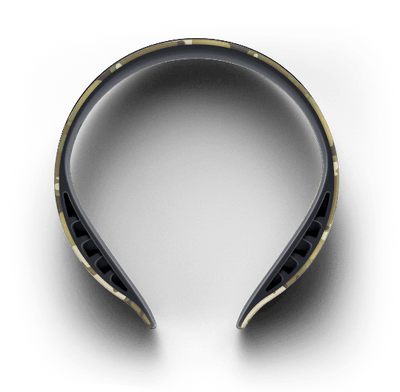
- Colors: Available in team colors via the Q-Collar Sleeve, sold separately. The sleeve is made of 4-way stretch moisture-wicking fabric, machine washable, and available in 15 team colors across four sizes.
Retail availability: The Q-Collar is also available at select sporting goods retailers. Use the store locator to find a location near you.
The device requires no maintenance beyond occasional cleaning with mild soap and water. It's reusable across multiple seasons. The collar itself is made of medical-grade materials designed to withstand the demands of contact sports.
Parents should involve their athlete in the decision. Fit and comfort matter. The collar needs to feel secure without being restrictive. Most retailers that carry the Q-Collar offer fitting assistance to ensure proper sizing.
Sport-Specific Research and Further Reading
For parents and coaches seeking deeper detail on how the Q-Collar has been studied specifically within football contexts, Q30 maintains a dedicated research page covering the pivotal clinical trials, imaging findings, and FDA review process that led to clearance.
Additional background on the broader science behind jugular compression and intracranial volume can be found on the Q30 science page.
Frequently Asked Questions
Does the Q-Collar prevent concussions?
The Q-Collar is FDA-cleared to help protect the brain from the effects of repetitive sub-concussive head impacts. However, the FDA states that "data do not demonstrate that the device can prevent concussion or serious brain injury." The Q-Collar is designed as an additional layer of protection to be used alongside helmets and other sport-appropriate protective equipment, not as a replacement for any existing gear.
How does the Q-Collar actually work?
The Q-Collar applies light, calibrated pressure to the sides of the neck, partially restricting the internal jugular veins. This causes a slight increase in blood volume inside the skull, which reduces the amount of space the brain has to move during impact. The principle is similar to reducing empty space in a shipping box: the contents still move, but the range of motion decreases. This reduction in brain movement is associated with less stretching and compression of neural tissue.
How is the Q-Collar sized?
The Q-Collar uses numeric sizing from 11 to 18, based on neck circumference measured at mid-neck. To measure, use a soft tape measure, pull snug with zero slack, and measure three times. Use the smallest measurement. If you fall between sizes, choose the smaller collar. Proper fit is essential for the device to function as intended.
Can the Q-Collar be worn with all football helmets?
Yes. The Q-Collar is designed to sit below the helmet and above the shoulder pads. It does not interfere with helmet fit, chin straps, or range of motion. The device has been tested for compatibility with standard football equipment.
What research supports the Q-Collar?
The Q-Collar is supported by over 25 peer-reviewed studies involving more than 500 athletes and analysis of over 500,000 head impacts across 10+ years of research. Key studies — including a British Journal of Sports Medicine paper on football players and a separate Frontiers in Neurology study on hockey players — observed that collar-wearing athletes showed no significant white matter changes on brain imaging over a season, while control groups did despite similar impact exposure. The FDA reviewed this body of evidence before granting clearance in February 2021.
Do professional football players actually wear the Q-Collar?
Yes. Professional athletes including Dalton Kincaid, Sauce Gardner, Tony Pollard, Dalton Schultz, and Drue Tranquill wear the Q-Collar during games and practice. These athletes have chosen to add the device as part of their personal equipment strategy for brain protection.
Where can I buy the Q-Collar?
The Q-Collar is available directly from q30.com for $199. It is also available at select sporting goods retailers. Use the store locator to find a retail location near you. The Q-Collar Sleeve, which adds team colors, is sold separately and available in 15 colors.