

Summary
- Head-impact exposure across a contact-sport career is not linear: youth, high school and college, and pro represent three distinct exposure profiles, each with different drivers and different levers.
- Practice volume, not game volume, dominates cumulative exposure at every level studied. Practice-design reform has been one of the highest-leverage interventions in the head-impact research, documented in the British Journal of Sports Medicine and adjacent journals.
- The American Academy of Pediatrics has updated its guidance to incorporate broader prevention strategies beyond acute concussion management alone, drawing on the Amsterdam 2023 consensus.
- Boston University CTE Center research has associated cumulative years of repetitive head-impact exposure with brain markers studied in former athletes. See the Boston University CTE Center for the published work.
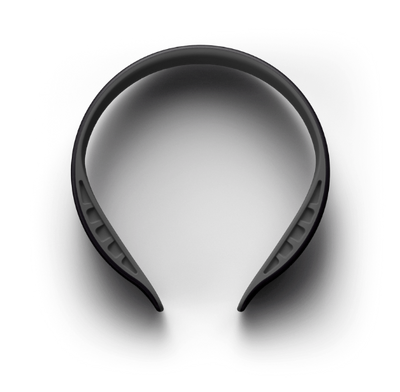
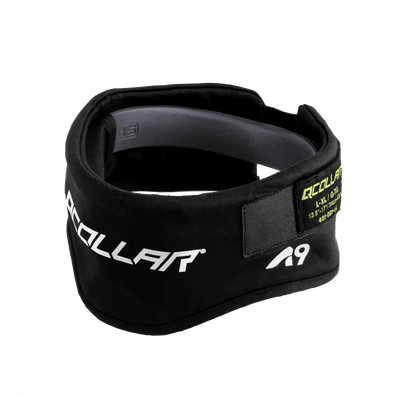
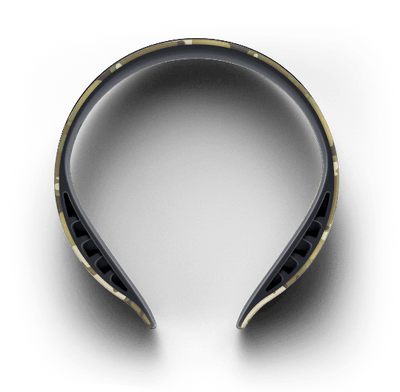
- Equipment, including the FDA-cleared Q-Collar for athletes 13 and older, sits as one layer in a broader exposure-management approach that also includes practice design, age-appropriate rules, and technique. More on the mechanism on the Q-Collar science page.
Head Impact Table of Content
Most conversations about brain safety in contact sports treat "football" or "hockey" as a single thing. A 12-year-old in a youth league practice, a 20-year-old Division I lineman, and a 28-year-old pro veteran are all described as playing the same sport. On paper, they are.
The head-impact load they absorb is not the same. Not remotely.
Over the last decade, research from the British Journal of Sports Medicine, the JAMA Pediatrics literature, and the Boston University CTE Center has made one thing clear: exposure to repetitive head impacts is not a constant across a career. It's a curve. And the shape of that curve, where the peaks are, where the long plateaus are, where recovery windows exist, looks different at the youth, college, and pro levels of the same sport.
This piece walks through what the research actually shows about how exposure diverges across a career, and what that means for the parents, coaches, and athletes making equipment and training decisions at each stage.
The Exposure Curve Isn't Linear
The old mental model of career head-impact exposure was roughly this: the higher the level of play, the more dangerous it is. Youth is a safer version of college, college is a safer version of pro, and the total risk scales up with age and competition.
The research of the last decade has dismantled that model. Three findings keep showing up:
- Practice volume, not game volume, dominates cumulative exposure. At every level studied, practices account for the majority of a player's head impacts across a season. The ratio varies by sport and level, but the direction is consistent.
- Hit magnitude and hit frequency are separate variables. A youth player may take more total impacts than a pro; a pro may take fewer impacts, but with higher average magnitude and rotational force. Cumulative "dose" is a function of both, not just one.
- Developmental stage changes the meaning of the same exposure. A cumulative season-long impact load at age 12 is not equivalent to the same load at age 22. The developing brain is a different substrate.
Put those three findings together and the career exposure curve looks less like a staircase and more like a series of distinct plateaus, each with its own shape, its own levers for reducing load, and its own stakes.
Youth: High Volume, Developing Brains
Youth exposure is the most counterintuitive chapter of this story. Parents often assume younger athletes are in the lowest-risk tier because the hits are smaller, the players are smaller, and the speeds are lower. The research complicates that assumption.
The published literature on youth head-impact exposure, much of it using helmet-mounted accelerometers, has consistently shown that youth football players accumulate hundreds of head impacts per season. Not all are hard. Most are below any clinical threshold for concussion. But the volume is real, and the individuals absorbing it are in the middle of brain development.
Two things matter at the youth level that don't matter in the same way later:
- Brain development. Myelination, the process by which brain fibers are insulated, continues into the mid-twenties. The brain of a 12-year-old is structurally different from the brain of a 22-year-old. Research in JAMA Pediatrics and adjacent journals has repeatedly flagged this developmental window as a reason to treat youth exposure as a distinct problem, not a scaled-down version of the adult problem.
- Career runway. An impact absorbed at age 12 is, by definition, earlier in a career than the same impact absorbed at 22. Cumulative lifetime dose begins accumulating at the youth level.
This is why the last decade has seen an unusual amount of rule-level change in youth sports. US Soccer restricted heading for U-11 and younger players starting in 2015. USA Hockey raised the age at which body checking is permitted. USA Football rolled out programs to reduce contact volume in youth practices. The American Academy of Pediatrics has updated its guidance to incorporate broader prevention strategies beyond acute concussion management alone, drawing on the Amsterdam 2023 consensus on pediatric sport-related concussion.
These rule changes are what the research community means when it talks about exposure management. They are not precautions against "the big hit." They are attempts to compress the cumulative dose curve during the developmental window.
High School and College: The Peak Volume Years
If youth is the developmentally sensitive chapter, high school and college are the peak volume chapters. This is where the exposure curve spends the most time at its highest sustained level.
The Broglio et al. study in the Journal of Neurotrauma, one of the most cited pieces of the head-impact exposure literature, followed 95 high school football players across four seasons and recorded an average of 652 head impacts per player per season. The researchers described the cumulative burden across a high-school career as "staggering." None of those impacts were individually diagnosed as concussions.
College football amplifies the pattern. Longer seasons, more practices, faster players, bigger collisions. Studies of collegiate programs using helmet-mounted sensors have documented season-long impact totals in the same range as or exceeding the high school figures, with linemen and defensive players carrying the heaviest loads.
Several things about the college level matter:
- Position matters enormously. A lineman and a quarterback play the same sport and absorb radically different exposure profiles. Head-impact research has consistently reported significant differences between the highest and lowest exposure positions.
- Practice structure is the single biggest lever. Programs that have reduced full-contact practice volume, the Ivy League eliminated full-contact in-season practice in 2016, and several Power Five programs have followed, have reported measurable reductions in cumulative exposure without measurable reductions in competitive outcomes.
- The season is the unit to watch, not the game. Headline concussions from games get the attention. The research-relevant variable is what happens across 3-4 months of daily contact.
For parents of high school athletes evaluating a college program, the useful questions are not how many concussions were reported last season. They are: how is practice structured, how much full-contact work is on the weekly schedule, and what is the program's philosophy on drill design and contact volume?
Pro: A Different Curve
The pro level rearranges the variables again. A pro football season involves fewer practices than a college season, collective bargaining rules in the major pro leagues have progressively reduced in-season contact practice. But games are faster, hits are harder, and career length compounds the exposure over years, not just months.
The Boston University CTE Center's post-mortem research has been the most influential body of work on long-term outcomes at the pro level. The pattern that has emerged from that research has associated CTE severity with cumulative years of exposure to repetitive head impacts. At the pro level, cumulative dose over years of play has been a recurring variable across the published findings.
This reframing matters for how parents and athletes think about the trajectory into pro sports:
- A player entering pro football has already accumulated a substantial cumulative dose from youth, high school, and college play. The pro level adds to that dose under different conditions, but it doesn't reset the counter.
- Position-specific exposure profiles persist at the pro level. A career spent at certain positions carries a different cumulative load than a career spent at others, even within the same sport.
- Contact-sport careers in hockey, lacrosse, and soccer show the same pattern. The specific mechanics differ, hockey's body checks, lacrosse's stick and body contact, soccer's repeated heading, but the career-long exposure curve model applies.
The research at the pro level does not suggest the game is wholly detrimental. It does suggest that cumulative dose is a meaningful variable, and that the tools for managing it at that stage are narrower than the tools available at the youth and college levels, where rule changes and practice design can meaningfully bend the curve.
Why the Curve Matters for Parents and Coaches
The practical reason to understand the exposure curve is that the levers for reducing cumulative dose are different at each stage. A parent of a 10-year-old and a parent of a 19-year-old are not looking at the same problem, and the advice that applies to one does not automatically apply to the other.
At the youth level, the biggest levers are structural: which sport, which league, which age-appropriate rule set, which practice culture. Exposure at this stage compounds into every stage that follows.
At the high school and college levels, the biggest lever is practice design. Volume of full-contact reps, drill selection, recovery windows between high-exposure days. The programs doing this well are not doing it by accident, they are acting on a decade of head-impact exposure research that has reached their coaching staffs.
At the pro level, the biggest levers are career length, position, and off-field recovery. Most of the high-leverage choices at this stage were made earlier, in youth leagues and in college programs.
Equipment sits across all three stages as a secondary but real layer of the broader exposure management picture. Helmets are engineered to address skull fractures and reduce translational acceleration. Neck strengthening, mouthguards, and devices like the Q-Collar, developed specifically in the context of this research shift, target the rotational forces and brain movement inside the skull that imaging studies have identified as mechanisms of sub-concussive change. None of these layers replaces the others. The decade of exposure research has consistently framed the problem as multi-layered, and the equipment stack is one of those layers.
The Takeaway
Contact sport is not one problem. It's at least three: a youth problem about cumulative exposure during brain development, a high-school-and-college problem about peak-volume years and practice design, and a pro problem about career-length dose.
The research of the last decade has given parents, coaches, and athletes the vocabulary, the data, and the frameworks to think about each of those stages separately. A parent making an equipment decision for a 13-year-old is not making the same decision as a college strength-and-conditioning coach or a pro team's medical staff. The exposure curve at each stage looks different, and the levers for bending it look different.
The most useful move is to stop thinking about "the risk of contact sports" as a single number and start thinking about it as a curve, one that parents and coaches have more ability to shape at the earliest stages than at any other point on it.
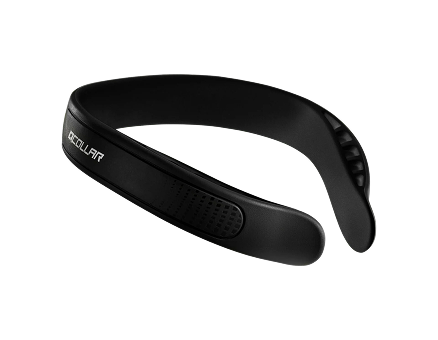
FOR ATHLETES 13+
Q-Collar
FDA-cleared to help protect athletes' brains from the effects of repetitive sub-concussive head impacts.
$199.00
Buy NowFrequently Asked Questions
Why is youth exposure treated as a separate problem from adult exposure?
Because the brain is still developing. Myelination, the insulating process that shapes how brain fibers transmit signals, continues into the mid-twenties. Research in JAMA Pediatrics and related journals has repeatedly framed youth head-impact exposure as a distinct category rather than a scaled-down version of adult exposure. The American Academy of Pediatrics has updated its guidance to incorporate broader prevention strategies beyond acute concussion management alone, drawing on the Amsterdam 2023 consensus.
Does more total impacts mean more risk, or does magnitude matter more?
Both, in different ways. The cumulative exposure literature treats head-impact dose as a function of frequency and magnitude together. A youth player may take more total impacts at lower magnitude; a pro player may take fewer impacts at higher magnitude and rotational force. The research consistently points to the full dose, frequency by magnitude across years of play, as the variable that has been associated with long-term outcomes, rather than either component alone.
Where do most head impacts happen: games or practices?
Practices, at every level that has been studied. Helmet-sensor research across high school and collegiate football programs has consistently found that practices account for the majority of season-long head impacts, simply because there are more practices than games. This is why practice-design reform, reducing full-contact volume, changing drill selection, adding recovery days, has been one of the highest-leverage interventions at the high school and college levels.
What are the highest-leverage actions at the youth level?
Structural decisions: choosing leagues and programs that follow age-appropriate contact rules, that have adopted reduced-contact practice models, and that emphasize technique over collision volume. The heading restrictions in U-11 and younger soccer, the body-checking age rules in hockey, and the contact-practice reductions in youth football are all examples of exposure management that parents can evaluate program-by-program.
How does the Q-Collar fit into an exposure-management approach?
The Q-Collar is an FDA-cleared Class II medical device designed to help protect the brain from the effects of repetitive sub-concussive head impacts. It applies gentle pressure to the jugular veins, which slightly increases blood volume inside the skull and reduces brain movement on impact. It is designed to be used alongside helmets, pads, and other sport-appropriate equipment, not in place of any of them. It is one layer of a broader exposure-management approach that also includes practice design, rule-appropriate play, and technique. The science behind the Q-Collar can be found on the Q-Collar science page.
Does the Q-Collar protect against concussions?
No equipment, or any device, can claim to prevent concussions, however the Q-Collar is clinically validated to better protect the brain from the effects of head impacts. The FDA has stated that data do not demonstrate that the device can prevent concussion or serious brain injury. The Q-Collar is designed as an additional layer of protection to be used alongside helmets and other sport-appropriate protective equipment, not as a replacement for any existing gear.
Where can I read the primary research on exposure profiles?
The primary literature is indexed in the NIH's PubMed database and is available through the British Journal of Sports Medicine, JAMA Pediatrics, and the peer-reviewed publications of the Boston University CTE Center. The CDC HEADS UP initiative publishes accessible summaries for non-specialist audiences.