

Summary
- Football has the highest cumulative head-impact load of any youth sport. Broglio et al. (2011, Journal of Athletic Training) tracked football players across multiple seasons and observed that players accumulate hundreds of head impacts over the course of a season, with linemen carrying the heaviest cumulative load.
- Imaging research, including diffusion tensor imaging studies, has associated higher cumulative impact loads with measurable changes in white matter integrity across a single season, even in athletes who never received a concussion diagnosis.
- The Boston University CTE Center has associated earlier age of first contact-football exposure with measurable differences in adult brain markers, reinforcing the focus on cumulative season-over-season load.
- The CDC HEADS UP program and the AAP's Amsterdam 2023 consensus have shifted toward managing cumulative head-impact exposure, not only acute concussion treatment.
- A layered approach (properly fitted helmet, mouthguard, contact-limit policies, heads-up tackling, neck strengthening, recognition, and the Q-Collar) addresses both single-event concussions and the cumulative sub-concussive load that nothing else in the standard football kit is designed to address.
Jump To A Section
- Why football stands apart for brain safety
- What the research shows about cumulative head impacts in youth football
- The layered approach to brain safety for football
- Where the Q-Collar fits
- From NFL sidelines to youth fields: Sauce Gardner is wearing it
- Pre-season checklist for parents of youth football players
- How to talk to coaches and athletic trainers
- Frequently Asked Questions
Football season is back. Helmets are coming out of garage bins, cleats are being pulled off shelves, and parents are running the same mental checklist they run every August: Do I have the best gear to keep my kids safer this year?
This guide is built to help answer that question: with research, with a clear-headed look at what the gear can and can't do, and with a specific case for why the Q-Collar belongs in your athlete's bag this season.
Why football stands apart for brain safety
Football is not like other sports. It's a high-volume contact sport, and the math on cumulative exposure is unlike anything else on a youth athlete's calendar.
A football player can take more head impacts in a single week of August two-a-days than a soccer player accumulates over an entire season. Most of those impacts are not concussions. They're sub-concussive: small, repeated, and almost always unreported because the player walks off feeling fine.
That's the part of the conversation that has shifted the most over the past decade. The medical field used to focus almost entirely on the diagnosable concussion: the big hit, the wobbly walk, the protocol. We now understand that the cumulative load of small impacts, taken over months and years of practice and play, may carry its own long-term consequences. The CDC and the American Academy of Pediatrics have both made this part of how they talk to parents.
Football also has a structural quirk that makes it different from almost every other sport: practice impact volume usually exceeds game impact volume. The actual Saturday or Sunday game is only a fraction of a player's weekly head-impact load. The drills, the line work, the tackling reps during the week, that's where the cumulative number is built.
For linemen especially, the exposure is staggering. Researchers measuring head-impact telemetry on high school football players have logged hundreds of impacts per player per season at the line of scrimmage. None of those reps look dangerous in isolation. They're not supposed to. That's exactly why the cumulative picture matters.
What the research shows about cumulative head impacts in youth football
If you want to understand the case for treating football brain safety seriously, you don't need to read a stack of papers. You need to understand three things.
1. The volume is real. Broglio et al. (2011, Journal of Athletic Training), one of the most-cited longitudinal studies of head impacts in football, tracked players across multiple seasons of practice and play. Players accumulated hundreds of head impacts over the course of a season, with linemen carrying the heaviest cumulative load. Most of those impacts were below the threshold typically associated with concussion symptoms. They still happened. They still loaded the brain.
2. The brain responds to cumulative load, not just to "the big hit." Imaging studies, including DTI (diffusion tensor imaging) work on football players over the course of a season, have found measurable changes in white matter integrity in athletes who took higher cumulative impact loads, even when none of those athletes had a diagnosed concussion. This is the body of work that has reframed how researchers, the NFL, and increasingly youth-sport governing bodies think about head impact exposure.
3. The Boston University CTE Center has shown that earlier exposure compounds. The risk of long-term neurological issues appears to scale not just with the number of impacts but with the number of years of contact football played, with earlier-life exposure carrying disproportionate weight. That doesn't mean every youth football player is at risk of a long-term outcome, most aren't. It does mean the youth years are not a "free" exposure window the way they were once treated.
None of this is meant to scare anyone out of youth football. The sport teaches discipline, teamwork, toughness, and a lot of life lessons that don't come easily anywhere else. The point is simply that the modern parent's job includes thinking about how those impacts add up over time, something that didn't exist a generation ago, because the science didn't exist a generation ago.
The layered approach to brain safety for football
There is no single piece of gear that "prevents" brain injury in football. Anyone who tells you otherwise is selling something. What works is a complementary approach: multiple layers, each addressing a different part of the problem.
A modern, research-aligned youth football brain-safety stack looks like this:
- A properly fitted, in-spec helmet. Non-negotiable. The helmet is the single most important piece of equipment a football player owns. Fit is everything, a helmet that's too loose or too old loses most of its design value.
- A mouthguard. Recommended by the AAP and reinforced by the Amsterdam 2023 international concussion consensus. A custom or well-fit boil-and-bite is part of the standard kit.
- Practice-contact limits. USA Football's Heads Up program and most state high school federations have pulled hard on this lever: capping full-contact practice volume to reduce the cumulative weekly impact load.
- Heads-up tackling technique. Coaching matters. Players who lead with their heads take more and worse impacts than players coached to lead with the chest and shoulders.
- Neck-strengthening conditioning. A growing body of research links stronger cervical musculature with reduced head acceleration on impact. It's free, it's simple, and most youth programs still don't do it.
- Recognition + graded return-to-play. Knowing what a concussion looks like, and refusing to return a player too soon, is the last and most important line of defense.
- The Q-Collar. The newest layer in the stack, and the only one designed specifically to address the part of the problem the helmet doesn't solve.
Each layer matters. None of them alone is the answer. The Q-Collar isn't a replacement for the helmet, the technique, or the recognition protocol, it's an addition to all of them.
Where the Q-Collar fits
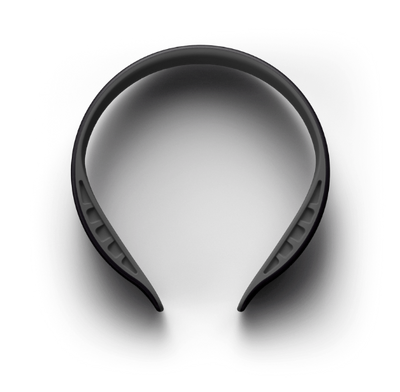
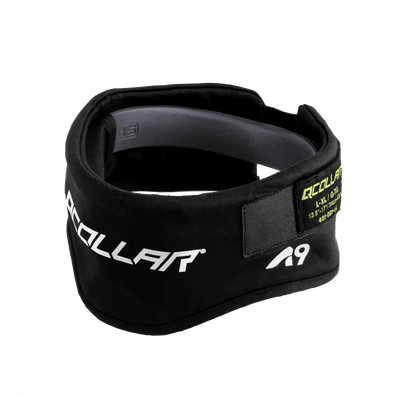
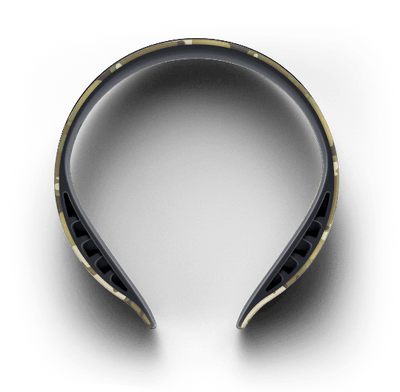
The Q-Collar is the first FDA-cleared device designed to help protect the brain from the effects of repetitive sub-concussive head impacts in sports. It's a soft, flexible collar that applies a small amount of pressure to the jugular veins, slightly increasing the volume of blood surrounding the brain. The result is a brain that fits more snugly inside the skull: less room to slosh, less internal movement on impact.
The seatbelt analogy that the brand has used for years is the one that lands with parents: the helmet is the frame, working on the outside. The Q-Collar is the seatbelt, working on the inside. You want both.
The football-specific evidence is what makes the device worth talking about for youth players in particular. A 2019 study by Myer et al. published in the British Journal of Sports Medicine followed high school football players across a full season. Players who wore the collar showed no significant changes in white matter integrity on DTI imaging across the season. Players who didn't wear the collar showed measurable changes. Same season. Same sport. Same impact exposure. The variable that differed was the collar.
That's not a guarantee. It's a research finding, and the FDA reviewed it (along with the rest of the pivotal data) when it cleared the device. The cleared indication is specifically about helping protect the brain from effects of repetitive sub-concussive head impacts. It is not cleared to prevent concussion or serious brain injury. No device is.
What the Q-Collar offers, in plain terms: a research-backed, FDA-cleared way to address one specific dimension of the problem, the cumulative sub-concussive buildup, that nothing else in the standard football kit is designed to address.
From NFL sidelines to youth fields: Sauce Gardner is wearing it
The Q-Collar isn't a science experiment running on the backs of youth athletes. It's already on the field at the highest level.
Sauce Gardner, the All-Pro cornerback now playing for the Indianapolis Colts, wears the Q-Collar in games and in practice. Cornerbacks live in collisions. Every snap is a potential collision: jamming a receiver at the line, sticking with a route, breaking on a ball, finishing a tackle. And he’s joined by dozens of others in the NFL who are taking necessary steps to be as safe as possible on the field. And that says something.
It says the collar is comfortable enough to wear on the neck for hours at a time, on the most demanding stage in football, without compromising play. It says a player whose career depends on every snap, who has access to every protective resource on the planet and a team of medical experts vetting his choices, looked at the device and decided it was worth wearing. Not just on Sundays. Every day.
That on-field and in-practice combination is the part parents should pay attention to. Game-day adoption is one signal. Practice adoption is the stronger one, because practice is where the cumulative head-impact volume actually piles up over the course of a season.
Now connect the line to your kid: if a pro athlete, an adult, paid to absorb collisions, with the best protective resources on Earth, is choosing to add the Q-Collar to his daily kit, the case for a youth football player whose brain is still developing and whose football career is just starting is at minimum equally strong. Probably stronger. Youth players want to look like the pros. The Q-Collar is one of the rare pieces of gear where mimicking a pro's setup is also genuinely the safer choice.
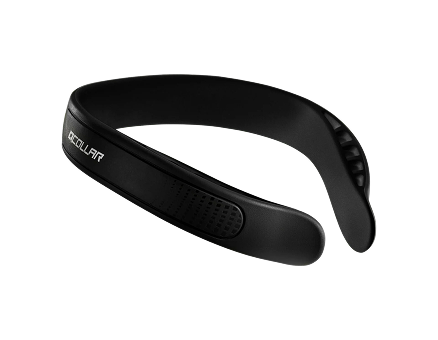
FOR ATHLETES
Q-Collar
FDA-cleared to help protect athletes' brains from effects of repetitive sub-concussive head impacts.
$199.00
Buy NowPre-season checklist for parents of youth football players
Pre-season is the right time to make decisions about brain safety. Mid-season is the wrong time. By the time the first scrimmage happens, the gear, the conditioning, and the family conversation should already be in place.
Here's the short list:
- Helmet inspection and fit. If your child's helmet is more than a couple of seasons old, get it checked. If it's been in a basement or a hot garage all summer, get it checked. Fit is the most-overlooked variable in youth football safety.
- Mouthguard confirmed. Have a backup. Kids lose them.
- Conditioning + neck strengthening. Two or three short sessions a week of basic neck-strengthening work, started before contact begins, will do more for impact resilience than most parents realize. Your athletic trainer or physical therapist can give you a youth-appropriate routine.
- Q-Collar ordered and sized. Order it before the first practice, not after. Allow your player a couple of practice sessions to get used to the feel. Most kids forget it's on within a week.
- Recognition training for the family. Everyone in the household should be able to spot the warning signs of a concussion. (Our Youth Sports Brain Safety guide walks through what to watch for.) Five minutes on the CDC HEADS UP site is also a high-value parenting investment.
- Know your school or league's return-to-play protocol. Don't learn it for the first time after an incident.
If you do nothing else from this list, do the helmet check and add the Q-Collar. Those are the two equipment-level changes with the strongest evidence behind them.
How to talk to coaches and athletic trainers
Coaches and athletic trainers are your allies. They want your child healthy, on the field, and playing all season. The conversation is not adversarial, it's collaborative.
A few things that help when you bring up the Q-Collar with a coach:
- Lead with the layered approach. Frame the collar as an addition to the program's existing safety stack, not as a critique of the program. "We're doing the helmet, the mouthguard, and the technique work, we're also adding the Q-Collar this year" lands much better than "I don't trust your safety setup."
- Bring the research. The 2019 BJSM football study by Myer et al. and the FDA clearance documentation are short, credible, and easy to share. Most coaches haven't been briefed on the device, they're just unfamiliar, not opposed.
- Approved by all leagues. The Q-Collar is cleared for use in the NFL, NCAA, USA Football, Pop Warner and by the National Federation of High Schools for usage.
- Mention pro adoption. Coaches tend to respect what NFL players choose to wear. The Sauce Gardner data point is a useful one to have in your back pocket.
Athletic trainers, if your school has one, are usually the easiest yes. They live and breathe this conversation already.
Frequently Asked Questions
Does the Q-Collar interfere with helmet fit?
No. The collar sits at the base of the neck, well below where the helmet ends. It does not affect helmet fit, helmet certification, or the player's ability to turn their head, look up, or play their position. NFL players, including Sauce Gardner, wear it under their helmets for full games and practices.
What does the research show specifically for football?
The most cited football-specific study was published in the British Journal of Sports Medicine in 2019 by Myer et al., following high school football players across a full season. Players in the collar group showed no significant white matter changes on DTI imaging; players in the control group did. The full pivotal data set was reviewed by the FDA, which then cleared the device as the first of its kind designed to help protect the brain from the effects of sub-concussive head impacts.
How early before practice should my player start wearing it?
Order the Collar before the first practice and let your player wear it during the first couple of conditioning sessions. Most kids report forgetting it's on within the first week. Pre-season is the time to handle the break-in, not Week 3 of the regular season.
What does the Q-Collar feel like to wear?
It feels like light pressure at the sides of the neck. Not restrictive, not tight, not painful. Players describe it the way you'd describe a snug collar on a polo shirt, present, but not interfering. The first practice is the only one most players consciously notice it. After that it becomes part of the kit.
NFL players actually wear this?
Yes. Sauce Gardner, the All-Pro cornerback now with the Indianapolis Colts, wears the Q-Collar in games and in practice. He's the most visible adopter, but he's not the only one. The collar has been showing up on NFL sidelines with increasing regularity as more players become aware of the research.
Where do I buy a Q-Collar?
The Q-Collar is available directly at the Q-Collar product page, and at many retail locations. Accurate sizing matters. Take two minutes to measure properly using the sizing chart on the product page. If you have questions about fit for a younger player, our customer support team can walk you through it.